Future Plastics - creating biodegradable alternatives to plastic
CWSF · 2026 Environment & Climate Change Silver Medal
Overview
I am working to create a biodegradable alternative that could help replace plastic because I am worried about the effects of plastics, particularly microplastics on animals, human health, and the environment. I made sodium alginate bioplastics, cross-linked with calcium chloride using 6 different plasticizers. Then I experimented with how these plasticizers affected the strength and flexibility of the samples through a series of tests. I concluded that sorbitol was the best addition because it had the most reliable results and made the bioplastic stronger and more flexible. My plastics are not near perfection, but after more time perfecting my recipe, this could help our plastic pollution problem. This project is important because plastic waste is a big problem in our world. We have become dependent on it in our daily lives so it would be a huge benefit to have an eco-friendly substitute that meets consumer needs.
Video
This video could not be played here. Watch it on the original project page.
Why?
Inspiration:
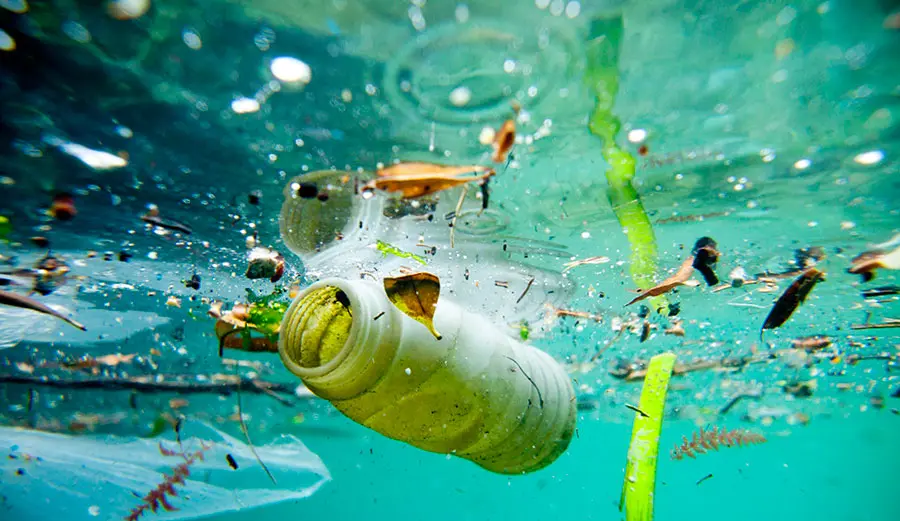
I was inspired to do this project because I care about the environment and the growing problem of microplastics. Research shows that more than 1500 species have been documented to ingest plastic. Additionally, according to the “United Nations Environment Programme” microplastics have even been found in human livers and kidneys. This shows an urgent need for a safer, ecofriendly alternative. Current bioplastics often fail because they are either too brittle or too weak, so I am trying to make a stronger version.
Personal Connection:
I experience this daily while my family tries to make lunches with less plastic. This can be a struggle because single-use plastics are easy and convenient. So, it would be a huge benefit to have biodegradable substitutes that replace single-use plastics while still mimicking products consumers rely on daily, like saran wrap, sandwich bags, and straws.
My project:
I found a recipe on ‘Science Buddies’ to make a biodegradable plastic that I have experimented with for 2 years. This year I focused on improving my recipe by testing whether different plasticizers would improve my bioplastics by making them stronger and more flexible.
My goal:
My goal is to help solve the plastic pollution problem with a biodegradable alternative since the world has become so reliant on plastic because of its versatility, durability, and low cost. An alternative as close to plastic as possible would help our environment thrive and protect our health as well.
How?
I have been working on improving my bioplastic recipe for the last 2 years that could become a biodegradable alternative to plastic. Last year I concluded that my bioplastics were not strong enough nor flexible enough to replace plastic.
Researching Plasticizers:
I researched different plasticizers from a variety of sources. Some plasticizers separate the molecules and make it bendier but also make it less strong. While some plasticizers tighten the molecules together and make it very strong but way less flexible, my project is about balancing the two. My bioplastics are made using ionic cross linking; my recipe uses calcium chloride (part of ionic cross linking), sodium alginate (also part of ionic cross linking), and glycerin (makes it more flexible).
Making the Bioplastics:
The plasticizers I added to my recipe are extra glycerin, chia seeds, aloe vera gel, corn syrup, sorbitol, and vegetable oil (independent variables). Each bioplastic was using the same method but to each i added a different plasticizer and left to cure for 7 days. I also made a control sample using the bioplastic recipe from last year to compare from.
Testing the Bioplastics:
The samples were tested to figure out which plasticizer improved the recipe the most. I conducted a weight test, a torsion test, waterproof test, fold test, heat test, and an opacity test. I tested the breaking weight (grams), number of torsion rotations before failure, fold result, opacity score, waterproof result, and heat response (dependent variables). Three trials were conducted for each test, averaging the results and analyzing the consistency of the results across the trials (n = 3). The data from the tests determine which plasticizer addition is the best so I can continue with improving my bioplastics.
What?
Question:
How do different plasticizers affect the strength and flexibility of sodium alginate bioplastic cross-linked with calcium chloride?
Hypothesis:
I hypothesized that adding extra glycerin to a sodium alginate bioplastic cross linked with calcium chloride will make it stronger and more flexible than other plasticizers such as chia seeds, vegetable oil, sorbitol, aloe vera gel and corn syrup because it separates the polymer chains, making it more flexible.
Most Successful Plasticizer:
My hypothesis was not supported. The best plasticizer addition to my bioplastics overall is sorbitol; this result is logical because the recipe I used does contain glycerin and adding sorbitol added extra strength and flexibility. Sorbitol got the third best results on the weight and the torsion test, but it has the best overall qualities as its scores are much more consistent; sorbitol showed lower variability (smaller error bars), which indicated higher reliability. I think Sorbitol made the bioplastic stronger because it increased how strongly the polymer chains stick together through forces like hydrogen bonding. Hydrogen bonding is a weak attraction between molecules that helps them stick together and stay connected. Hydrogen bonding between polymer chains likely increased cohesion, improving strength making.
Strongest plasticizer:
The strongest plasticizer I added is vegetable oil, I think this is because Vegetable oil may have disrupted uniform polymer interactions, leading to a more rigid, but less flexible structure
Most Flexible Plasticizer:
The most flexible bioplastic is the one with the aloe vera gel plasticizer, I think aloe vera gel increased flexibility because it mixed well with the polymer and allowed the chains to move more freely.
Least Successful Plasticizers:
The least successful plasticizer is the corn syrup. It scored very low on the twist test with 0 twists.The corn syrup plasticizer could not hold any weight on the first trial then on the third it held 750g which makes it not very reliable, it also cannot turn and is not foldable, making it the least successful bioplastic. It surprised me that not all the plasticizers I added to my recipe improved bioplastics. For example, chia seeds and corn syrup scored way worse on the weight test compared to my control bioplastics. I think corn syrup and chia seeds plasticizers weakened the structure because it disrupted the connections between the polymer chains instead of supporting them. I think in the trials where they did hold a lot of weight, it was because the piece was thicker, or the ionic cross linking worked better in that section.
Conclusion:
After reviewing my results, I concluded that sorbitol is the best overall plasticizer to add to bioplastics made from sodium alginate cross linked with calcium chloride, proving my hypothesis incorrect. Although my bioplastics are far from perfect, it is a step in the right direction in finding a plasticizer that balances strength and flexibility.
So What?
Importance:
Experimenting with different plasticizers is important because Zahra Eslami et al. states “alginates potential for various applications is relatively limited due to brittleness, poor mechanical properties, scaling-up difficulties, and high-water vapor permeability (WVP). Choosing an appropriate plasticizer can alleviate the situation by providing higher flexibility, workability, processability, and in some cases, higher hydrophobicity” (2023). So, finding the right plasticizer could improve these problems, which is what I’m trying to achieve. There are still many questions to explore, but this is a step in the right direction.
Final Result:
My result is that sorbitol is the best plasticizer overall, making my bioplastics stronger and more flexible while still maintaining transparency. Sorbitol also showed lower variability (smaller error bars on graphs), which indicated higher reliability.
Different Uses:
Different plasticizers added to bioplastics create samples with varying properties that could work for different purposes. For example, the bioplastic using vegetable oil as a plasticizer felt closer to a container rather than a plastic bag, it's very strong and thick feeling similar to a container. My other bioplastics feel more like plastic bags or straws making this recipe adaptable for a variety of uses.
Main Takeaway:
My main takeaway is that there is a trade-off between strength and flexibility. When the polymer chains are held tightly together, the material is strong but less flexible. When the chains can move more, the material becomes flexible but weaker. Experimenting with different plasticizers and ratios will help to find a balance between the two.
What's Next?
My biodegradable plastic is a step towards a plastic alternative, but further optimization is needed. In the future, I will test different ratios of my ingredients, finding an optimal balance between strength and flexibility. I would also like to do a biodegration rate analysis, to better understand how and how long it takes to biodegrade. And lastly, I would like to alter my procedure to get more uniform bioplastics as well as better and quicker mass production.
Thanks
There are few people that helped me with my project. Amy Perry and Tyler Van Moll (my mom and dad) helped me gather materials, hold things when needed, give me materials at important moments and by taking pictures. I would also like to thank Claudia Durand, who helped me after I won at regionals to prepare my project for the Canada wide science fair.
References
Eslami, Z., Elkoun, S., Robert, M., & Adjallé, K. (2023). A review of the effect of plasticizers on the physical and mechanical properties of alginate-based films. Molecules, 28(18), 6637. https://doi.org/10.3390/molecules28186637
Concrete Captain. (n.d.). Biodegradable plasticizers list. https://concretecaptain.com/biodegradable-plasticizers-list/
Current World Environment. (n.d.). Bioplastic production using aloe vera gel as plasticizer: A sustainable approach. https://www.cwejournal.org/vol2no2/pbioplastic-production-using-aloe-vera-gel-as-plasticizer-a-sustainable-approachp
EuroPlas. (n.d.). How are bioplastics made? https://europlas.com.vn/en-US/blog-1/how-are-bioplastics-made
Gum Stabilizer. (n.d.). Sodium alginate and calcium chloride. https://gumstabilizer.com/sodium-alginate-and-calcium-chloride/
International Energy & Resources Institute. (n.d.). How does plastic pollution affect the environment? https://iere.org/how-does-plastic-pollution-affect-the-environment/
MDPI. (2023). [Polymer research article]. https://www.mdpi.com/2073-4360/18/8/985
National Institutes of Health. (2023). [Article on bioplastics/plasticizers]. https://pmc.ncbi.nlm.nih.gov/articles/PMC10534897/
ProQuest. (n.d.). [Scholarly journal article]. https://www.proquest.com/docview/3134598696
Rochell, H. (2026, March 10). Plastic pollution. Encyclopedia Britannica. https://www.britannica.com/science/plastic-pollution
Science Buddies. (n.d.). Make sustainable fabrics from seaweed. Science Buddies. https://www.sciencebuddies.org/science-fair-projects/project-ideas/GreenChem_p006/green-chemistry/alginate-seaweed-biofabrics
ScienceDirect. (2023). [Article on bioplastics]. https://www.sciencedirect.com/science/article/abs/pii/S2214289423000674
ScienceDirect. (n.d.). Plasticizer. https://www.sciencedirect.com/topics/materials-science/plasticizer
YouTube. (n.d.). [Video]. https://www.youtube.com/watch?v=dt_eIeKJYbE
YouTube. (n.d.). [Video]. https://www.youtube.com/watch?v=P8RtSQ9az2U
YouTube. (n.d.). [Video]. https://www.youtube.com/watch?v=6J26Wmvltzs
YouTube. (n.d.). [Video]. https://www.youtube.com/watch?v=OLV50pL3Ams
Pictures and graphs:
OpenAI. (2026). Diagram showing ionic cross-linking in sodium alginate [AI-generated image]. ChatGPT. https://chatgpt.com
OpenAI. (2026). Graphs with Error Bars of Data Collected [AI-generated image]. ChatGPT. https://chatgpt.com
OpenAI. (2026). Future improvements of biodegradable plastic [AI-generated image]. ChatGPT. https://chatgpt.com
Rochell, H. (2020, October 19). Ocean plastic: The facts. #TOGETHERBAND. https://togetherband.org/blogs/news/ocean-plastic-the-facts
Surfers Against Sewage. (n.d.). Plastic pollution: Facts & figures. https://www.sas.org.uk/plastic-pollution/plastic-pollution-facts-figures/
Images (19)
Awards (2)
- Silver Medal
- Selected for CWSF 2026
Competition history
- CWSF 2026
Related projects
CWSF · 2026
Bio-Plastics
CWSF · 2026
Plant Power: Creating Bioplastic from Starch
CWSF · 2026
Practical Polymers 2
ISEF · 2019
Biodegradable Backlash
CWSF · 2026
Gone With The Tide: The Biodegradation of Bioplastics in a Simulated Marine Environment
ISEF · 2024
Applications of the Engineered Novel Solid and Liquid Bioplastics From Invasive Algae and Waste Corncobs
ISEF · 2018
Understanding the Degradation of an Algae-derived Bioplastic and Its Immediate Effects on Aquatic Environments
ISEF · 2015
Biodegradable Plastic... Too Good to be True?
Closest projects by meaning, across every fair and year in the corpus.