Gone With The Tide: The Biodegradation of Bioplastics in a Simulated Marine Environment
CWSF · 2026 Environment & Climate Change
Overview
I studied how chitosan (a natural, eco-friendly material derived from the crushed shells of crab or shrimp) affects the biodegradation rate—how fast something degrades in nature—of bioplastics in a marine environment. As standard plastic lasts in the ocean for hundreds of years, choking marine life and crumbling into toxic microplastics, in contrast, bioplastic is designed to break down naturally in only a few weeks. I tested 5 different ratios of chitosan to alginate, a seaweed-derived powder used to make bioplastic, in a marine-like environment: salty water filled with dirt and microorganisms for 15 days. Preliminary results show that although all the 5 bioplastic (various ratios chitosan to alginate) were biodegradable, higher chitosan amounts slowed the process while strengthening the plastic. This shows we can create balance: By making a straw or container that is strong enough to use but still disappears over time if it ends up in the ocean.
Video
This video could not be played here. Watch it on the original project page.
Video
Transcript: Hi, I'm Meron, and in today's world, plastic waste is everywhere: in the air, the soil, and the water. It's very important that we find alternatives to conventional plastics that help us maintain our lifestyle while reducing or eliminating the environmental impact. Bioplastics address the impacts of conventional plastics due to their biodegradability.
In my experiment, I made bioplastics by mixing various ratios of alginate and chitosan and tested their biodegradability in a marine-like environment: a 3.5% salt solution containing dirt and microorganisms. My preliminary results show that the higher alginate to chitosan ratio, the higher the biodegradability. The decrease in biodegradability can be attributed to the fact that any material's biodegradability decreases with reduced water intake. My ongoing experiment aims to find the optimal alginate to chitosan ratio that is sufficient for tensile strength and biodegradability.
Why?
In our world today, up to 12 million tons of plastic debris enter the ocean every year; the UN calls it a "planetary crisis.“ In today's world, plastic waste is everywhere: in the air, the soil, and the water. It's important that we find an alternative to conventional plastic that helps maintain our lifestyle while reducing or eliminating its environmental impact. Plastics made from biomass could be the solution to the issue at large due to their biodegradability.
Main areas of my background research include the time it takes for conventional plastic to degrade (est. 1000 years +) and the harmful chemicals used to create these plastics (Petrochemicals). I wanted my bioplastic to be better than LDPE (Low-Density Polyethylene). This plastic is mainly seen in grocery bags. To ensure that my bioplastic models minimized these major issues, I set 3 guiding objectives: water resistance, biodegradation, and tensile strength.
I hypothesized that chitosan and alginate could be used to create a bioplastic, and that the 50/50 ratio would have optimal properties (biodegradable and strong enough).
Growing up on the West Coast, I frequently visited the beach and noticed increasing plastic pollution. This experience inspired me to find a solution using natural waste to help address the global problem of plastic waste.
Using chitosan derived from these shells, we not only prevent waste from entering landfills but also create a bioplastic from an underutilized material. This makes my approach distinct, both eco-friendly and innovative, compared to more commonly used bioplastic sources.
How?
My background research was primarily based on past projects focused on designing bioplastics from cassava starch. To ensure credibility, I cross-referenced information from multiple reputable sources.
Below are the steps I used to make bioplastic and test its biodegradability.
Phase 1: Making Bioplastic
Alginate was mixed with distilled water.
Chitosan was mixed with glycerin, distilled water, food colouring, and a small amount of vinegar.
The mixtures were then combined.
Repeated for each ratio.
Phase 2: Ionic Cross-Linking
The mixture(s) were poured into moulds (3 samples per treatment).
Then submerged in a 5% calcium chloride bath.
Samples were patted dry, placed on a silicone mat and left to dry overnight in a temperature-controlled room.
Phase 3: Biodragation Process
Each sample was weighed and labelled, then placed into jars.
A salt solution was prepared with distilled water, aquarium seawater and nitryfing bacteria, then distributed.
Garden soil was distributed among the jars, which were sealed tightly.
Phase 4: Recording of Data
Take each bioplastic out of its jar and place it on a silicone mat (labelled) in a temperature-controlled room to dry for 48 hours.
Once the samples were fully dried, they were measured for further results.
Independent variable: 5 treatment levels: 0%, 10%, 25%, 50%, and 75% Chitosan (corresponding to 100%, 90%, 75%, 50%, and 25% Algenite, respectively).
To ensure equal testing, strictly controlled variables were used: samples were soaked in a 5% calcium chloride solution for 7 minutes. Every sample had 2 mL of glycerin. To simulate a marine environment in each jar, a 3.5% salt solution was used, with 10g of soil and 66mL of nitrifying bacteria. All 15 jars were kept in the same place to ensure they remained at the same temperature and lighting environment, keeping surrounding conditions consistent.
What?
The biodegradation data (preliminary results) show that the higher the alginate-to-chitosan ratio, the higher the biodegradability. Meaning the addition of chitosan reduces the biodegradability compared to the control. The decrease in biodegradability can also be attributed to the fact that any material's biodegradability decreases with reduced water intake capacity. The antimicrobial properties of chitosan could be an equally important factor in the decrease in biodegradability.
The preliminary results in this project cannot confirm which alginate-to-chitosan ratio is optimal for producing a biodegradable, water-resistant, and strong plastic (the desired quality). However, the results show that the optimal ratio (Chitosan/Alginate) is likely between 75/25 or 50/50, as the 25/75 is less flexible (undesired quality of bioplastic) and 90/10 is less water-resistant (undesired quality of bioplastic).
The optimal alginate-to-chitosan ratio for making a biodegradable, water-resistant bioplastic with sufficient flexibility and tensile strength is currently being tested, with additional measurements of water resistance and tensile strength underway, and results will be ready for the Canada-wide Science Fair.
Alginate and chitosan biodegrade in the ocean mainly through enzymatic action by marine microorganisms (bacteria and fungi) that break their polymer chains into natural, non-toxic products, such as water and CO2. Alginate (from brown algae) breaks down via alginate lyases, while chitosan (from crustacean shells) breaks down via chitosanases.
Key Factors of Biodegradation in a Simulated Marine Environment:
Mechanism: Degradation starts with physical breakdown, followed by enzymatic hydrolysis that breaks the glycosidic bonds (C-O-C).
Microbial Action: Bacteria and fungi break down these polysaccharides, using them as a source of carbon and energy.
Byproducts: The degradation process is eco-friendly, resulting in soluble intermediates that eventually form microbial biomass, water, and carbon dioxide.
So What?
The results show that finding the optimal alginate-to-chitosan ratio is necessary to produce a biodegradable bioplastic with sufficient strength. Chitosan improved tensile strength while reducing biodegradability. It can be concluded that by varying the Chitosan ratio, bioplastics with varying biodegradation rates, tensile strengths, and flexibilities can be produced to meet different needs. Furthermore, the results show the potential of bioplastics as an environmentally friendly alternative to conventional plastic that has been polluting our marine environment for centuries.
What's Next?
Considering the current state of this project, the first stage has just begun, with tensile-strength and water-resistance results upcoming. This project could be improved by using direct ocean water containing a more representative set of microorganisms. Conducting the experiment outdoors to mimic actual conditions would provide more realistic results. Testing the shelf life of bioplastics could also give insights into the usable lifespan before breakdown under normal conditions.
Thanks
I would like to thank everyone who made my project possible. First, I would like to thank my parents for providing me with the materials and for their constant encouragement throughout the process. I would also like to thank the regional fair organizers and sponsor teacher, Mr. O’Brien, and Jennie Copeland our regional fair director for making this opportunity possible, giving valuable advice, and helping me present my project. I am especially grateful to my dad, who not just supported me and encouraged me but also offered me insight and a different perspective and helped me with problems when I was stuck. The support from all these people made a big difference and helped me overcome challenges during my project.
References
Journal Articles:
Abirami, S., Gnanamuthu, G., & Nagarajan, D. (2021). Bioconversion of shrimp shell waste into compost preparation and its plant growth study. Indian Journal Of Agricultural Research, (Of). doi.org
Benito-Kaesbach, A., Beltrán-Sanahuja, A., Mathers, R., & Sanz-Lázaro, C. (2025). Understanding the degradation of bio-based polymers across contrasting marine environments using complementary analytical techniques. Journal of Cleaner Production, 524, 146435. doi.org
Chen, B., Ai, C., He, Y., Zheng, Y., Chen, L., & Teng, H. (2024). Preparation and structural characterization of chitosan‑sodium alginate nanocapsules and their effects on the stability and antioxidant activity of blueberry anthocyanins. Food Chemistry: X, 23, 101744. doi.org
Harini, R., Sandhya, K., Sunil, C. K., & Natarajan, V. (2025). Seaweed as a sink for microplastic contamination: Uptake, identifications and food safety implications. Environmental Research, 278, 121631. doi.org
Tennakoon, P., Chandika, P., Yi, M., & Jung, W.-K. (2023). Marine-derived biopolymers as potential bioplastics, an eco-friendly alternative. iScience, 26(4), 106404. doi.org
Proceedings, Posters & Standards:
ASTM International. (n.d.). Standard test method for determining aerobic biodegradation of plastic materials in the marine environment by a defined microbial consortium or natural sea water inoculum (Standard No. D6691-17). astm.org
Rajesh, A. (2023). Ecofriendly polymeric material: Paving the way for circular bio-economy [Poster presentation]. Society for Science. windows.net
Web Pages & Articles:
Ponant Magazine. (2026, March 2). Tidal phenomenon: High and low tides. Explorations. ponant.com
ScienceDirect. (n.d.). Activated sludge - an overview. sciencedirect.com
The Ocean Cleanup. (2026, April 24). Ocean plastic pollution explained. theoceancleanup.com
Images:
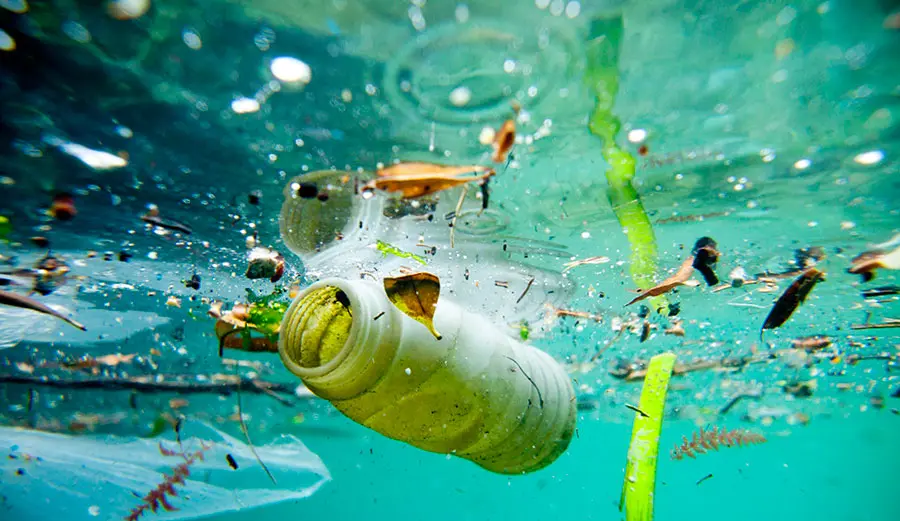
Launay, C. (n.d.). Trash floating on the Marseille Shore [Canvas Print]. Fine Art America. fineartamerica.com
Images (13)
Awards (1)
- Selected for CWSF 2026
Competition history
- CWSF 2026
Related projects
ISEF · 2019
OceanBioplas: The Plasticity of Marine Exoskeleton-Inspired Materials and Their Degradability in the Environment (Soil and Seawater/Saltwater)
JSHS · 2020
Ocean.Bioplas: The Plasticity of Marine Exoskeleton-Inspired Materials and Their Degradability in the Environment
ISEF · 2018
Understanding the Degradation of an Algae-derived Bioplastic and Its Immediate Effects on Aquatic Environments
ISEF · 2026
Sustainable Bioplastics for Marine and Terrestrial Biomes
ISEF · 2022
Development of Seaweed Bioplastics to Alleviate Environmental Plastic Pollution
ISEF · 2018
From Shrimps to a Barbie: Shrimp Shell Bioplastics - A New Solution to the World's Growing Plastic Problem
ISEF · 2015
Biodegradable Plastic... Too Good to be True?
ISEF · 2024
Applications of the Engineered Novel Solid and Liquid Bioplastics From Invasive Algae and Waste Corncobs
Closest projects by meaning, across every fair and year in the corpus.