The Effect of Surface Temperature on Chemiluminescence
Overview
Purpose: Luminol testing is used by forensic scientists as a presumptive blood test at crime scenes. Because Luminol can detect the presence of blood that has been diluted 10 million times, it is highly effective. The purpose of this investigation was to determine how surface temperature affects the reaction rate, as well as the ability of Luminol to detect the presence of hemoglobin. Procedure: Wood test samples were treated with interstitial fluid, a hemoglobin source, and sprayed with Luminol solution at surface temperatures of 50° C, 20° C, 10° C, and 0° C; reaction rates were timed and recorded, and a (–) was used to document negative reactions. Untreated control samples were also tested at these temperatures. Since all treated samples tested positive, the temperature was increased by 10° C until treated samples tested negative. All treated samples tested negative at 110° C, so temperature was decreased by 1° C to determine a more exact point at which the hemoglobin molecules were destroyed. Conclusion: After analyzing the results of 15 trials, it was concluded that surface temperature does affect Luminol reaction rate; an inverse relationship exists between surface temperature and the reaction rate of the Luminol test. Treated samples with surface temperatures of 50° C, 20° C, 10° C, and 0° C all tested positive, while all control samples tested negative. Standard deviations in these data sets ranged from 0.012 to 0.101. It was determined that temperatures of 107° C and higher can destroy the hemoglobin molecules, producing negative results. Real world implications of this research could include blood evidence on a metal building in a hot climate or blood evidence concealed by arson.
Competition history
- ISEF 2014
Resources
Related projects
ISEF · 2024
Glowing, Glowing, Gone!
ISEF · 2014
You Missed a Spot: Accuracy of Luminol Chemiluminescence to Detect Blood at a Crime Scene using Concealment Techniques and Measurements of False Positives
CYSF · 2026
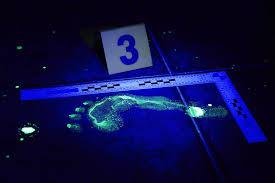
Crime Scene Chemistry Investigating The Cool Blue Light of Luminol
ISEF · 2016
Mechanism of the Oscillating Chemiluminescence Reaction Using Luminol
ISEF · 2017
A Novel Whole-Cell Bacterial Sensor Utilizing the Chemiluminescent Interactions between 3-Aminophthalhydrazide and Metalloproteins
ISEF · 2015
Luminol and Silver Nanoparticles: A Brilliant Pair
ISEF · 2015
Identifying the Optimal Concentrations of Luminol and Sodium Carbonate for Sonochemiluminescence
ISEF · 2016
Skewing the Clues: Investigating the Accuracy of Forensic Science Assays through Peroxidases and Antioxidants
Closest projects by meaning, across every fair and year in the corpus.
Browse more like this
Source: Regeneron International Science and Engineering Fair