OceanBioplas: The Plasticity of Marine Exoskeleton-Inspired Materials and Their Degradability in the Environment (Soil and Seawater/Saltwater)
Overview
Purpose: Shell waste contains useful compounds: chitin, calcium carbonate, and protein. Yet unlike plastics, they can naturally degrade in the environment. Inspired by the concept of marine exoskeleton composition, I developed alternative materials to combat the plastic problem. Procedure: Development took place in 4 stages: Preliminary, Experimental, Degradation testing in 5 different settings for 12 weeks and Enhancement. Using permutations, I formulated the ratios/combinations as mathematical inequalities that defined intervals where the formation was achieved. Results: The physical properties range from thin, flexible films to more rigid, composite-like structures. Chitosan (chitin derivative) and CaCO3 have positive correlations to tensile strength while diminishing flexibility. Each gram of Chitosan increases tensile strength by 15%-154% depending on ratios/combinations, while each gram of CaCO3 increases tensile strength by 5%-13%. The addition of protein improves tensile strength up to 5 times and stretchability on chitosan and CaCO3 combination. Biodegradation in organic soil occurs faster than photodegradation in saltwater. Melanin in squid ink slightly accelerates the degradation process, with minimal effect on tensile strength and flexibility. Conclusions: Compounds derived from crustacean shell waste can be utilized to synthesize alternative materials to plastic. The ratios/combinations determine the qualities and applications. Some OceanBioplas meets ASTM D6400 for 60% degradation within 180 days in organic soil without high temperatures, has the potential to photodegrade in saltwater with longer time based on linear projection and has comparable tensile strength to regular plastic according to ASTM D638. Prototypes were successfully created.
Awards (2)
- United States Environmental Protection Agency: Alternate trip winner
- National Security Agency Research Directorate : Honorable Mention "Material Science"
Competition history
- ISEF 2019
Resources
Related projects
JSHS · 2020
Ocean.Bioplas: The Plasticity of Marine Exoskeleton-Inspired Materials and Their Degradability in the Environment
CWSF · 2026
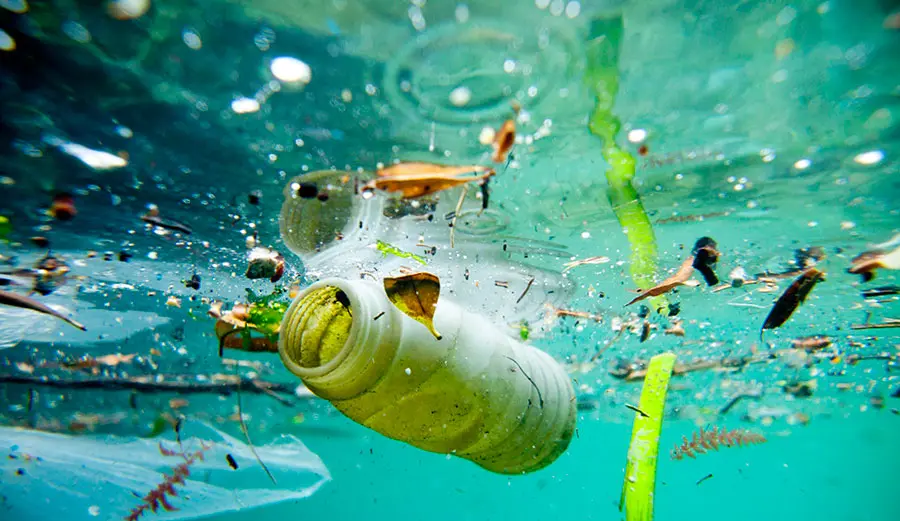
Gone With The Tide: The Biodegradation of Bioplastics in a Simulated Marine Environment
ISEF · 2026
Sustainable Bioplastics for Marine and Terrestrial Biomes
ISEF · 2021
Cyclo.Plas 2: A Dual Focus Development as Alternative Materials to Plastic by Upcycling Fish Scale Waste Components
ISEF · 2025
Biodegradable Algae Plastic
ISEF · 2024
Applications of the Engineered Novel Solid and Liquid Bioplastics From Invasive Algae and Waste Corncobs
ISEF · 2022
Development of Seaweed Bioplastics to Alleviate Environmental Plastic Pollution
JSHS · 2022
Cyclo.Plas 2: A Dual Focus Development as Alternative Materials to Plastic by Upcycling Fish Scale Waste Components
Closest projects by meaning, across every fair and year in the corpus.
Browse more like this
Source: Regeneron International Science and Engineering Fair