Ocean.Bioplas: The Plasticity of Marine Exoskeleton-Inspired Materials and Their Degradability in the Environment
JSHS · 2020
Overview
Objective/Goals: She ll waste contains useful compounds: chitin, calcium carbonate, and protein which influence its physical properties. Yet unlike plastics, they can naturally degrade in the environment. Inspired by the concept of marine exoskeleton composition, I developed alternative materials to combat the short-lived/single-use plastic problem. Methods/Materials: Pro ject development took place in 4 stages: Preliminary, Experimental, Degradation testing in 5 different settings for 12 weeks, and Enhancement. Using permutations, I formulated the ratios/combinations and derived mathematical inequalities that define intervals where formation was achieved. Results: The physical pr operties range from thin, flexible films to more rigid, composite-like structures. Chitosan (chitin derivative) and CaCO3 have positive correlations to tensile strength while diminishing flexibility. Each gram of Chitosan increases tensile strength by 15%-154% depending on the ratios/combinations, while each gram of CaCO3 increases tensile strength by 5%-13%. The addition of protein improves tensile strength up to 5 times. Biodegradation in organic soil occurs faster than photodegradation in saltwater. Melanin in squid ink slightly accelerates the degradation process, with minimal effect on tensile strength and flexibility. Conclusion/Discussion: The rat ios/combinations of compound derived from shell waste determine the qualities and applications. Some Ocean.Bioplas successfully biodegraded in 12 weeks in organic soil, which meets ASTM D6400 for 60% conversion in industrial composting facilities in 180 days and has the potential to photodegrade in saltwater up to 54% based on linear projection. Ocean.Bioplas has comparable tensile strength up to 32.5 N/mm² surpassing some regular plastics, including polystyrene and LDPE, according to ASTM D638. Prototypes were successfully created.
Competition history
- JSHS 2020
Resources
Related projects
ISEF · 2019
OceanBioplas: The Plasticity of Marine Exoskeleton-Inspired Materials and Their Degradability in the Environment (Soil and Seawater/Saltwater)
CWSF · 2026
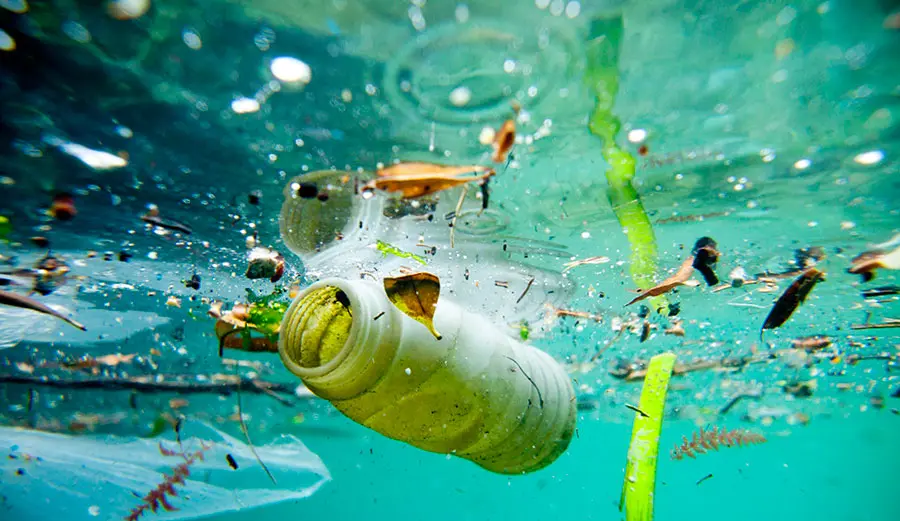
Gone With The Tide: The Biodegradation of Bioplastics in a Simulated Marine Environment
ISEF · 2026
Sustainable Bioplastics for Marine and Terrestrial Biomes
ISEF · 2022
Development of Seaweed Bioplastics to Alleviate Environmental Plastic Pollution
ISEF · 2021
Cyclo.Plas 2: A Dual Focus Development as Alternative Materials to Plastic by Upcycling Fish Scale Waste Components
ISEF · 2021
Designing a Bioplastic Material to Replace Polystyrene and Polypropylene in Single-Use Hard Plastics that Rapidly Degrades in Landfill, Freshwater, and Saltwater Environments
JSHS · 2022
Cyclo.Plas 2: A Dual Focus Development as Alternative Materials to Plastic by Upcycling Fish Scale Waste Components
ISEF · 2024
Applications of the Engineered Novel Solid and Liquid Bioplastics From Invasive Algae and Waste Corncobs
Closest projects by meaning, across every fair and year in the corpus.