Energy: Sustainable Materials and Design
This research project aimed to design and evaluated a prototype of Plant Electric Cells (PEC) capable of generating clean electricity from the natural growth of living plants. A green area w…
Earth & Environmental Sciences (Junior Division)
Abstract My experiment helps people understand that you can filter water with resources from a mountain but it will not be clean enough to be drinkable. For my experiment I filtered dirty wa…
Chemistry (Junior Division)
Third Award
Lack of hard water purification solutions costs American corporations $25 billion annually due to extra energy usage, maintenance, and premature replacement. To support environmental sustain…
Energy: Sustainable Materials and Design
The increase in thermal load due to AI infrastructure has led to a rise in power and water consumption. Evaporative cooling towers have low operational costs, but waste sizeable amounts of w…
Engineering Technology: Statics & Dynamics
Automotive spoilers are critical for vehicle safety, reducing pressure drag and generating downward force to increase tire traction and stability. However, spoilers inherently create aerodyn…
CYSF · 2026

Is nature vs. nurture still an interesting debate? This discussion has gone on for many decades, but how did it really begin? My project details the studies, research and general knowledge t…
Microplastic toxicity in seafood is an emerging global concern, particularly in regions where both economies and diets heavily rely on aquaculture. To tackle this challenge, microplastic acc…
CWSF · 2026
Disease & Illness
Bronze Medal
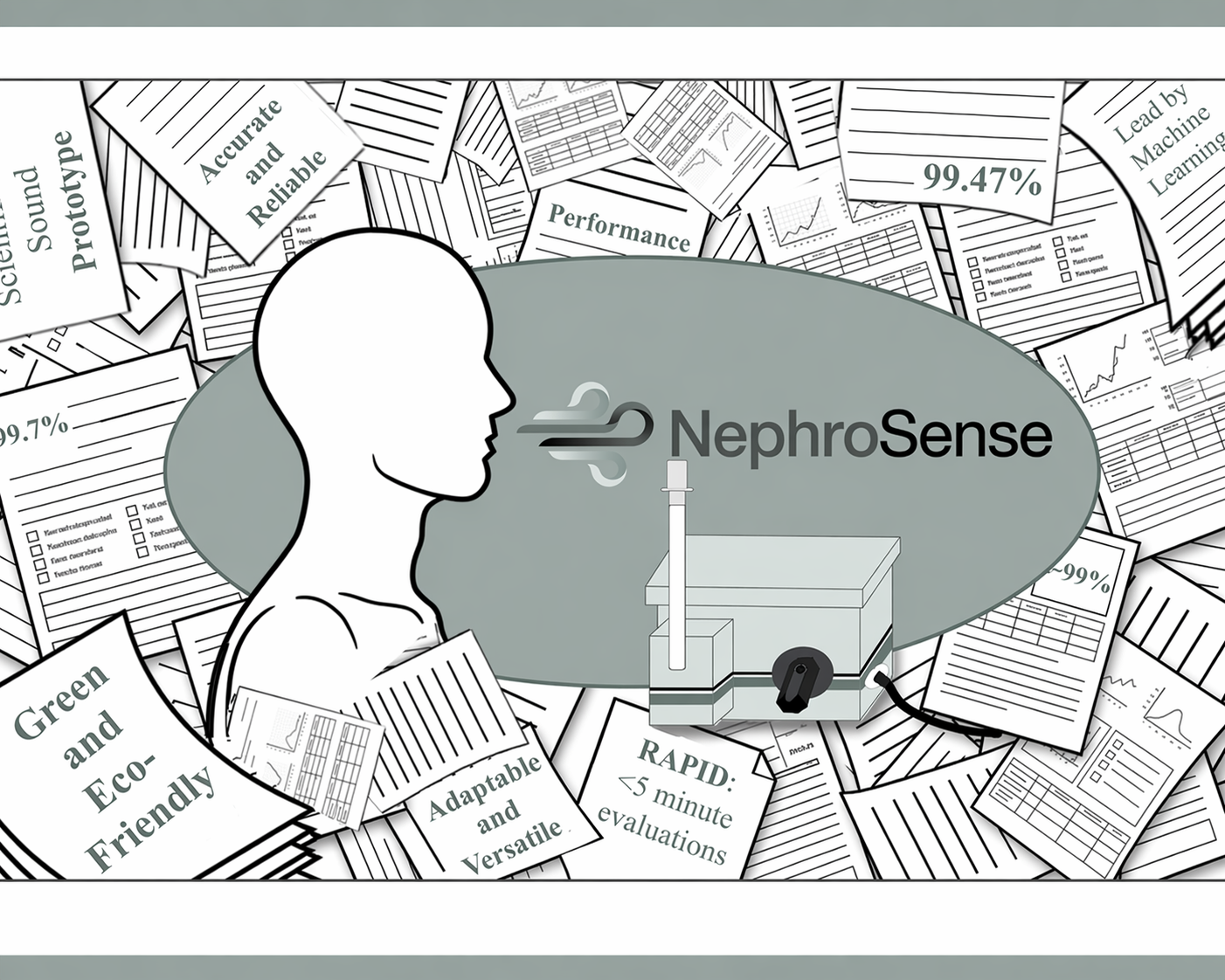
Proactive disease screening is vital for preventive care, yet common biomarker tests are invasive, wasteful, and indefinitely slow. Conversely, NephroSense proposes generalized breath analys…
Environmental Engineering (Track 2) (Senior Division)
Greenhouse gas (GHG) emissions is one of the most important contributing factors to global climate change. Extensive monitoring is required to determine emission impacts. Compared to orbital…
Biomedical and Health Sciences
Schizophrenia is a chronic neurodevelopmental disorder. In low-resource settings like Zimbabwe, stigma and limited psychiatric infrastructure delay diagnosis. This study investigated whether…
Software Design
Artificial intelligence education faces a dual challenge: tools that provide accessibility limit control over neural network design, while flexible frameworks impose significant programming…
Translational Medical Science
Alzheimer’s disease (AD) causes the gradual loss of neurons, which leads to memory and cognitive problems. Due to the inability to replace the lost neurons, current treatments cannot stop or…
Translational Medical Science
Intracranial aneurysms (IAs) often rupture before detection, causing hemorrhagic stroke that is fatal in 50% of cases. Expensive ($800 - $8400) hospital-based diagnostic tests are conducted…
Robotics and Intelligent Machines
Online platforms such as social media and video games are designed to stimulate reward mechanisms in the brain, which can lead to excessive use and reduced attention control. This project in…
Medicine & Physiology (Track 2) (Senior Division)
First Award
Alzheimer’s disease (AD) affects 1 in 9 Americans over age 65, yet 98% of clinical trials fail, reflecting a mismatch between cellular heterogeneity and coarse-grained patient-level single-t…
Behavioral and Social Sciences
Stroke is a critical global health issue, and many cases are preventable if risk factors are identified early. Current risk assessment approaches often separate behavioral and neurophysiolog…
Behavioral & Social Sciences (Senior Division)
Stroke is a critical global health issue, and many cases are preventable if risk factors are identified early. Current risk assessment approaches often separate behavioral and neurophysiolog…
Translational Medical Science
Schizophrenia is a chronic neurodevelopmental disorder affecting approximately 24 million people worldwide. Despite its severity, its biological mechanisms remain poorly understood, and curr…
CYSF · 2026

Gold Medal
Designing and testing andidates for precise schizophrenia treatment developed with a neurobiologically precise lense.
Translational Medical Science
Purpose: Neuroblastoma and glioblastoma are highly aggressive malignant neural tumors affecting pediatric and adult populations respectively. Both are associated with very poor prognoses des…
Computational Science (Senior Division)
Non-verbal individuals often experience difficulty communicating basic needs and emotional states. This project investigates whether physiological signals from wearable sensors could be used…
Robotics and Intelligent Machines
Second Award
Globally, tens of millions of people suffer from lower body impairments, including spinal cord injuries, cerebral palsy, stroke, and muscular dystrophies, leading to loss of independent mobi…
Behavioral & Social Sciences (Senior Division)
First Award
Current diagnostic methods can only detect neurodegenerative conditions after symptoms emerge, when significant neurological damage has already occurred. This project investigates early sign…
Translational Medical Science
Alzheimer's disease (AD) is a progressive neurodegenerative disease that continues to be difficult to diagnose in early stages. Despite studies demonstrating that when caught early, cognitiv…
Translational Medical Science
Stroke, the 2nd leading cause of death(>7M) and 3rd leading cause of disability (94M) worldwide, is a time-critical emergency. Rapid, accurate stroke detection and severity assessment during…
Computational Biology and Bioinformatics
Fourth Award
Understanding neuronal dynamics often requires advanced mathematical tools that are not easily accessible to students or researchers without specific mathematical training. This project aime…
Biomedical Engineering
Non-invasive BCIs such as EEG and fNIRS are limited by low spatial resolution and high latency, while invasive neural implants require surgery and pose biocompatibility risks. Existing close…
Biomedical Engineering (inferred)
Exoskeleton robots hold great promise for stroke rehabilitation with upper limb impairments. However, conventional motion-based exoskeletons often lack brain-driven control, limiting user en…
CWSF · 2026
Disease & Illness
Silver Medal
Alzheimer's disease affects over 55 million people, projected to double by 2050. Current pharmaceutical treatments including Donepezil and Memantine primarily alleviate symptoms without addr…
Biomedical Engineering
This project seeks to address the global need for affordable, early screening tools for diabetic peripheral neuropathy (DPN) by engineering a low-cost, self-contained wearable glove that qua…