Physics and Astronomy (inferred)
Ultra-high-energy cosmic rays (UHECRs) are the most energetic particles in the universe and have been studied extensively for over 20 years; however, due to various limitations, their source…
Physics and Astronomy (inferred)
The first gravitational wave signal detected and interpreted by humans was observed by the Laser Interferometer Gravitational-Wave Observatory (LIGO) on September 14, 2015 (NASA, 2015). Sinc…
Physics and Astronomy (inferred)
Dark matter's presence is attested to through its gravitational impact on galaxies, seen most saliently in their rotational velocity curves. In this work, the Andromeda Galaxy (M31) is exami…
Physics and Astronomy (inferred)
In this study, several different machine learning models were trained on exoplanet data gathered by NASA’s Kepler Telescope. The study aimed to find if any models were significantly more acc…
Physics and Astronomy (inferred)
Physics is all about approximation. No one formula can account for every factor and predict any event with full accuracy. Over the years, scientists have used different methods to make these…
Physics and Astronomy (inferred)
The question for this research was, “Does the metallicity of the type of star an exoplanet orbits or the exoplanet’s temperature influence the gaseous composition of its atmosphere?”. It was…
Physics and Astronomy (inferred)
The study of hadronization, the process of quarks combined into hadrons, is pivotal for understanding the universe's formation, yet current theories inadequately explain this process. This s…
Physics and Astronomy (inferred)
Bose-Einstein Condensates (BECs) are a novel state of matter that exhibit unique characteristics where groups of atoms behave as a macroscopic wavefunction. BECs can be highly sensitive to m…
Physics and Astronomy (inferred)
The ePIC Collaboration is developing a sophisticated detector for the Electron-Ion Collider (EIC) hosted by Brookhaven National Laboratory and Jefferson Lab, aimed at studying interactions b…
Physics and Astronomy (inferred)
Population III (Pop III) objects are the first generation of stars in the universe, forged directly from the primordial gas of post-Big-Bang Recombination. Though they have never been direct…
Physics and Astronomy (inferred)
We present the derivation of a wave equation for the relativistic description of massive spin 1/2 particles in finite-noncommutative spacetime. We first construct a complex projective space…
Physics and Astronomy (inferred)
Dark matter has been a key area of research in physics for over ninety years. The dark photon is a proposed model of dark matter that extends the Standard Model to add a new force mediator t…
Physics and Astronomy (inferred)
The mining of Earth's finite metals has devastating environmental and humanitarian impact. Asteroid mining provides an elegant alternative to the limited resources on Earth, as well as playi…
Physics and Astronomy (inferred)
Centicubes have been a common manipulative in elementary and middle school classrooms to teach counting, addition, subtraction, fractions, ratios, and proportions. Since each cube has a leng…
Physics and Astronomy (inferred)
Existing power line infrastructure is constrained by inefficiency, vulnerability to disruption, and detrimental environmental impacts. As energy demand rises globally alongside increasing re…
AJAS · 2022

Physics
Particle Physicists use Liquid Argon Time Projection Chambers (LArTPCs) for the study of subatomic particles, especially neutrinos. However, the current LArTPC data analysis requires manual…
AJAS · 2022
Physics
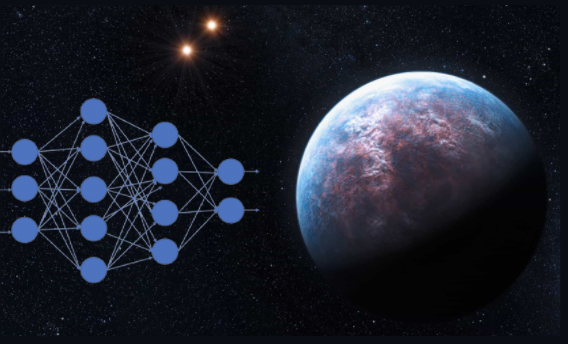
The NASA Kepler mission is humanity’s most extensive survey of sun-like stars in the Milky Way for exoplanets. Even today, Kepler’s dataset is at the forefront of discovery; methods for vett…
AJAS · 2022

Physics
A defining, yet complicated aspect of tennis is the spin. It was evident that spin greatly alters trajectory after impact, but spin had also been identified to affect aerodynamics in flight.…
AJAS · 2022
Physics
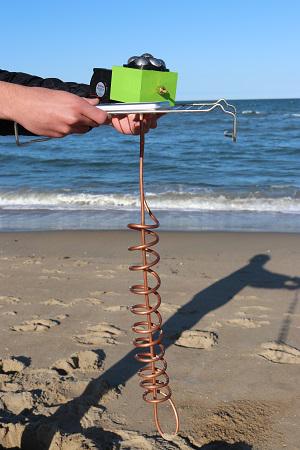
The global water crisis is a well-documented fact. It affects all regions and demographics. Atmospheric water harvesters (AWHs) have not been explored well as an option for freshwater. An es…
Physics and Astronomy (inferred)
An important issue in modern observational astronomy is detecting low-energy gas and dust, primarily in galaxies; previous work includes extensive use of the 21cm hydrogen (HI) line in radio…
Physics and Astronomy (inferred)
Blue large-amplitude pulsators (BLAPs) were discovered in 2017 and recognized as an extraordinarily rare group of variably and thermally homogeneous stars. BLAPs appear to have lost a very s…
Physics and Astronomy (inferred)
Due to the vast amount of data collected by the Kepler telescope, it takes a lot of time and work for scientists to go through each light curve and figure out whether or not the curve is a p…
Physics and Astronomy (inferred)
The goal of this study was to further confirm, characterize, and classify LHS3844b, an exoplanet detected by the Transiting Exoplanet Survey Satellite (TESS). Additionally, I strove to deter…
Physics and Astronomy (inferred)
I use existing Very Large Array observations of high redshift radio galaxies (HRRGs) to create a simulated spectral energy distribution (SED) of early radio sources (z~6). I diagnose the pre…
Physics and Astronomy (inferred)
The radial velocity (RV) method, otherwise known as Doppler spectroscopy, is an effective exoplanet detection technique that has been increasingly used in recent years, used to discover arou…
Physics and Astronomy (inferred)
The presence of extrasolar planets (“exoplanets”) is commonly deduced via the stellar magnitude method of observation in which a time-series of images records the temporary reduction in magn…
Physics and Astronomy (inferred)
Quantum mechanics is an extremely relevant topic of the day as it is being used in technology for more efficient information processing and secure cryptographic systems. Many of these advanc…
Physics and Astronomy (inferred)
This research seeks to explore a new method for the discovery of new hypothetical particles. Studying data collected from collisions of particles at high energies offer the possibility to di…
Physics and Astronomy (inferred)
Project 1640, a collaboration between the American Museum of Natural History and California Institute of Technology, works to discover possible exoplanet candidates using a novel telescopy t…
Physics and Astronomy (inferred)
Solar flares are among the leading causes of our planet's magnetosphere disruption; they often induce major geomagnetic storms, and can lead to consequences, chiefly telecommunications and s…