Neural Networks and Cancer Detection
ISEF · 2019 Translational Medical Science
Overview
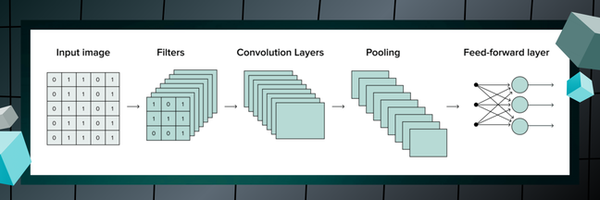
Cancer is one of the leading causes of death every year throughout the world, lung cancer and breast cancer are the most prevalent. The purpose of the project Neural Networks and Cancer is to provide an artificial intelligence(AI) that is able to detect different types of cancer with a less than 2% margin of error. Any help with detection could minimize unintentional fatalities or improper diagnosis, false positives or false negatives and would likely maximize correct diagnosis and diagnosis efficiency. The AI would not replace a technician as it would provide a failsafe for misdiagnosis. Software aided diagnostics would be a leap for machine learning. The AI is made up of multiple functioning layers which replicate the brain and provide the deep learning aspect. The neural network is then supplied with a substantial amount of CT scans to "learn" from. First, a filter must be applied to the image the filter to create a feature map. The neural network The neural network used several layers, an input, multiple hidden layers, and an output layer with the assistance of Python, TensorFlow and, Keras which are open sourced tools. After the AI is trained from the scans, the AI is tested on 100 randomized scans. This process continues until it reaches proficiency. In the first stages of testing the neural network on average worked at less than a 2% margin of error when shown stage 1-3 CT cancer scans and 98.6% average was found.
Competition history
- ISEF 2019
Resources
Related projects
ISEF · 2022
Constructing a Neural Network To Classify Lung Cancer
ISEF · 2023
Detection of Malignant Lung Tumors From CT Scans Through Deep Learning-Based Artificial Intelligence Algorithms
ISEF · 2025
A Novel Convolutional Neural Network to Detect and Classify Brain Tumors
ISEF · 2019
A Lung Cancer Prediction and Detection System Using Nodule Based Methods and Machine Learning Algorithms
ISEF · 2018
Deep Learning of Mammogram Images to Enable Automatic and Accurate Breast Cancer Screening
ISEF · 2022
Detection of Benign and Malignant Lung Nodules in 3D Volumes Generated From Thoracic Computed Tomography Scans Leveraging Artificial Intelligence, Year 2
ISEF · 2018
Neural Networks and Colon Polyp Detection
CYSF · 2025
Eyes of the Future: Locating Cancerous Tumors within the human lungs with the assistance of Convolutional Neural Networks (CNNs)
Closest projects by meaning, across every fair and year in the corpus.
Browse more like this
Source: Regeneron International Science and Engineering Fair