Hydroelectricity
CYSF · 2026
Overview
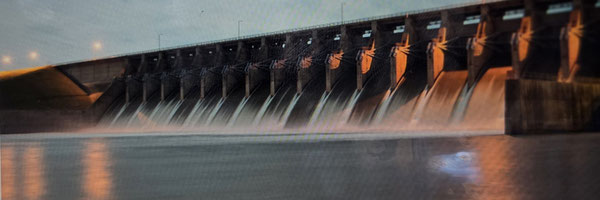
In this experiment project, we will be analyzing and investigating the conversion of water energy into electricity. Water kept at height will fall onto the turbine and electricity will be produced.
Hypothesis
Hypothesis: If the height of the water head increases, then the amount of electricity produced will also increase, causing the LED to light up, because gravity will have more time to pull the water down, adding more potential energy. Important Details:
• When water is kept on a height, it stores potential energy, that potential energy becomes kinetic energy as the water pours down which makes electricity. More potential energy=more kinetic energy=more electricity.
• The amount of energy produced should increase as the height increases.
Research
Question: Can changing the water head help in making more electricity? Notes: The height is a very important factor in how much electricity can get produced from the dam. Engineers increase and decrease the amount of electricity by using this specific factor. This factor, when understood fully can boost the benefits of dams and make, again to say, more ELECTRICITY!
Variables
• Manipulated (Independent, changed) - The height from which the water falls from (water/hydraulic head)
• Controlled (kept same) - The amount of water, place, same setup, wires and electronics
• Responding (Depending, result) - The amount of electricity produced (measured with a voltage meter/LED)
Procedure
1. On a clear surface, gather all your materials.
2. Take the lids and glue them to one lid’s edges, edges touching edges.
3. Glue this set of lids to the measuring cup’s front “cup” part. The open part of the cup.
4. Now take the item you picked that was rectangular/square and won’t get wet and glue it to the plastic box.
5. For the DC gear motor, if the insulation is causing the conductor to be too short, you can always cut the excess insulation away. Be careful not to cut the conductor.
6. Use the alligator clips to attach the wires of the DC gear motor to the LED.
7. Glue the DC gear motor to the rectangular/square object. You can also glue a DC gear motor stand to the object first and then just fix the DC gear motor in it snugly.
8. Attach a gear to the DC gear motor shaft and then glue the gear to the wheel’s center, or make a hole and fit the shaft in the hole, then glue it.
9. Place the project under a tap.
10. Turn on the tap and place the tap’s head close to the model.
11. Put a timer for 20 seconds.
12. Record the brightness of the LED, repeat this 3 times.
13. Repeat steps 11-12 but this time raise the tap’s head higher than before .
14. Compare the results, and find the average for both heights.
Observations
| Trial 1 | Trial 2 | Trial 3 | Average
Low | No brightness | No brightness | No brightness | No brightness
High | Bright | No brightness | No brightness | No brightness
Analysis
Our results: Our trials showed that the higher the water head was, the more likely the LED lit up. This is because the higher the height from which the water falls, the more potential energy it has, which becomes kinetic energy as the water falls. It was very surprising that the LED did not light up at all in the low head trials and only once in the high head trials. When more kinetic energy spins the shaft, a higher amount of electricity is produced. This is exactly what happens in dams, so even if our project is small-scale, it still is a very important part of information for engineers and scientists. To wrap it up, our project results tell us that higher the water head, the more potential energy the water has. Why the amount of electricity decreases than the theoretical energy in dams?:
• As the water falls down the penstock, friction decreases the amount of potential energy the water has.
• The longer the penstock, the more friction it faces, this can decrease the amount of electricity made by a few percent.
Conclusion
Our hypothesis was correct. The LED lit up more often in the trials where the hydraulic head was higher than when it was kept lower. This teaches us that keeping the penstock higher can make the electricity generated more reliable. As mentioned earlier, increasing the height makes more potential energy, which becomes kinetic energy as the water falls. These key ideas are scientific perspectives engineers always consider, and our project connects with it beautifully.
Application
• Since hydroelectricity is a renewable source of electricity, it helps decrease pollution and climate change.
• After installation, dams become very cheap sources of electricity because water falling from a height is a free source of energy.
• Our experiment helps engineers understand whether a long penstock or a short penstock is more efficient.
• Higher water head can help rural communities produce more electricity from their small hydroelectric systems.
Sources Of Error
• Electronics not working, not enough power to charge objects, wires broken or chipped away. - Bought new materials, changed the electronics, cutting more insulation and fixing them, also changing/adding new objects.
• Moved the tap a bit up and down. - Did the trial again or NO SOLUTION.
• The wheel was too heavy. - Made a wheel with plastic lids.
• Variables were not working. - Made new variables.
Citations
(104) How to Generate Electricity from Water flow || Hydropower - YouTube https://www.youtube.com/shorts/ndC5xU5_7u8 Bing Videos Bing Videos science principles of a DIY water wheel - Search https://natural-resources.canada.ca/energy-sources/renewable-energy/hydroelectric-energy https://www.youtube.com/watch?v=l9_t8QiipKc
Acknowledgement
• Waheguru ji (God)
• Ms. Sharma
• Our parents
• Workers of Princess Auto, Librarians Rona, PM hobby craft
• Google Chrome
• Microsoft Edge
• Keerat’s Brother
• Ms. Manjula
• Ms. Amanda
• CLassmates
•
Copilot search (not for results)
•
Keerat’s Aunt
• Microsoft Bing
• Librarians
• Naampratap and family
• Mrs. Grewal
• Mr. Karan veer ji
• Mr. Habot
• Science booklet
• Copilot (not for results)
• Google ai overview (not for results)
Awards (1)
- BRONZE
Competition history
- CYSF 2026
Resources
- (104) How to Generate Electricity from Water flow || Hydropower - YouTube
- https://www.youtube.com/shorts/ndC5xU5_7u8
- Bing Videos
- Bing Videos
- science principles of a DIY water wheel - Search
- https://natural-resources.canada.ca/energy-sources/renewable-energy/hydroelectric-energy
- https://www.youtube.com/watch?v=l9_t8QiipKc
- View Log Book (may download a file)
Related projects
JSHS · 2023
Powering Our House with Water: Testing a Water Turbine
ISEF · 2018
In-Line Turbine Network Based Hydro-Electric Power Generation System for Residential Application
ISEF · 2014
The Powerful Water
CYSF · 2026
Hydro energy vs Wind energy
ISEF · 2014
The Power Output of Hydroelectric Generator Prototypes
ISEF · 2020
Developing and Analyzing Hydropower Generators in Fishpond Makaha
ISEF · 2014
Power Struggle
ISEF · 2021
Harnessing Household Water Potential
Closest projects by meaning, across every fair and year in the corpus.
Source: Calgary Youth Science Fair