How Co2 changes our ocean
CWSF · 2026 Curiosity & Ingenuity
Overview
Ocean acidification is an aquatic cycle that many people don't know about. This is a cycle where the carbon dioxide gets released into the air and slowly gets absorbed by our ocean. And when sea water manages to get a hold of this Co2 it releases a series of chemicals which drop hydrogen ions. Lowering the pH scale around the surrounding water, causing it to get harmful. And now I will explain how dangerous it is for shelled marine life. This acidity flowing around can harm our coral reefs. Have potential to kill shelled life such as... Crabs, mussels, oysters and clams. Did you know algae can play a significant part in ocean acidification? Algae in the flowing acid can raise the pH scale of its surrounding waters, helping with the acidic process. And it's considered that It's most effective during night. But not a global solution to this problem.
Why?
I did this project just to show and talk about just how much we're affecting our planet. I was inspired by my love for the ocean and to talk about global warning about our ocean, to spread awareness for this serious problem and to help gain solutions for this cycle. With my egg experiment i've thought that the egg would've cracked from partical pressure, and see, i wasn't aware of aragonite saturation back than, but that's what had happened. From the pH being under-saturated and the egg being unable to maintain its shell it dissolved quite quickly within overnight and only leaving it's membrane. if we slowed down this process it would be beneficial for many life. Shelled marine life, coral reefs and the fish that depend on these coral reefs, and us humans. if we weren't were to slow this process down it would affect food security, increase health risks to toxic shellfish we would be saving lives in many different forms by slowing down this cycle,
How?
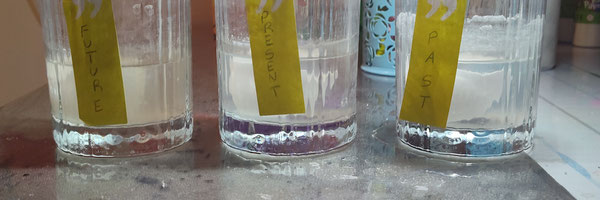
How did I improve my project, and what did i do? It's as simple as learning what acidification is. ocean acidification is caused by absorption of C02 in the ocean, it flows around the water, and that's what damages the coral reefs! I chose to study about it further to understand more solutions, such as the concentration of particles that affect the pH levels of seawater. How does that work? That's another key factor to understanding ocean acidification. Between the loses and the solutions. But this cycle of acidification, aragonite saturation is the process where shelled life struggle to keep their shells strong and healthy if this saturation is below 1, and it tells us that there isn't enough minerals to maintain a healthy shell, and the water is corrosive, meaning! It'll begin to dissolve or melt the shell and i learned all this by comparing studies to detect what is true or false information. and how i mimicked this growing problem was that i used eggshells and submerged them in vinegar and like how i just typed. shelled marine life struggle to maintain their shells in unsaturated waters so the egg dissolved quickly in the water.
What?
The experiment involved another process called aragonite saturation, and I had already explained what it is. So in the vinegar based solution, it struggled to maintain its shell and dissolved in the acidic, within a short time. Which was quite unrealistic given the short circumstances of this project, yet is the only way I could demonstrate it at the time being, but differ from vinegar and sparkling water it'd still give the same results, the eggshell would basically melted within the solution, leaving only the membrane of the eggshell left. For more detailed and accurate information you can ask me with my log book, for i have done much more for my results,
So What?
The end of this experiment had me in awe, as the results quite baffled me the first time I've done this project. As you've read before I've originally had thought the egg would've cracked under the acidic pressure which decreases saturation state of calcium carbonate in seawater, which reduces the ability of marine organisms to build shells and can actively dissolve existing structures. But after overnight and as I checked my results. I learned that the egg submerged under our acidic base had dissolved. However our Co2 solution (baking soda) had carbonating bubbles beneath the eggshell. Signalling the mid-cycle of Ocean acidification. And our eggshell in our plain saltwater. Remained in pristine condition.
What's Next?
First of all i could've used a pH indicator to this project. To boost other's understanding of the acidity of this cycle. I could improve this project by experimenting with sparkling water instead of vinegar as it contains C02 gases and would give more realistic results, and to measure the different levels of acidity. The next steps to this is to carry out with the plan and to document everything within my logbook.
Thanks
i would like to thank my teacher for supporting me with this project, cheering me on when things didn't go right. She helped me access computers for my resources, printed images for me, helped me create my board. I couldn't think of anyone else to help me with this project. She helped me understand things i couldn't comprehend with my project, helped detect valuable information with among my studies
References
I originally wanted to do a project called "Ocean in a bottle" but while researching about the scrap project. I stumbled upon ocean acidification and chose to use ocean acidification, which I'm glad I did, I started researching about it through Google, learning how it impacted shelled marine life... coastal reefs.. and I originally was going to do the BTB method but from lack of resources I found another method involving eggs through google! To make sure this information was right I throughly studied each document that popped up and took notes. Retrieved most of the images through Pinterest which mostly didn't carry where the image came from. But some of the images carry the website and which i hope will do.
Images (2)
Awards (1)
- Selected for CWSF 2026
Competition history
- CWSF 2026
Related projects
ISEF · 2015
Acidification: Testing the Effect of Our Ever Changing Environment on Our Oceans and Marine Life
ISEF · 2015
Coccolithophores in a Changing World
ISEF · 2019
Saving Our Seas: A Solid Solution to Reducing Carbon Dioxide and Ocean Acidification
ISEF · 2016
Minimizing the Effects of Ocean Acidification on Coral Reef Health
ISEF · 2023
Preserving Aquatic Life From the Harmful Effects of Ocean Acidification
CYSF · 2025
How Does Sea Acidification Affect Shellfish?
ISEF · 2017
Effects of Ocean Acidification on Primary Consumers in a Marine Ecosystem
ISEF · 2015
Correcting Ocean Acidification with Potassium Carbonate
Closest projects by meaning, across every fair and year in the corpus.