Chladni Patterns: What Do Art, Music, and Physics Have in Common?
CSEF · 2003 Physics & Astronomy
Overview
Objectives/Goals In this project, I studied how the shape of the medium and the frequency of the sound affect the standing wave patterns that occur in a medium when it is set into vibration. I also tried to change the patterns by forcing nodes. Methods/Materials 16-gage steel plates were cut into four different shapes - a square, a circle, a rectangle, and a violin shape. A plate was clamped at the center parallel to the ground using a vice and a C-clamp. Sand was then placed on the plate and spread evenly across the entire area of the plate. A violin bow was rubbed vertically at different positions on the edges of the plate creating a set of pitches that displaced the sand creating the Chladni patterns. The frequency of the pitch and the standing wave patterns were recorded and analyzed. Results I discovered that each shape created certain types of nodes; for instance, the circular plates always created nodes that were diameters and concentric circles while the rectangular plates tended to have parallel and perpendicular lines. As the frequency of the harmonic pitch increased, the number of nodal lines, or the comlexity of the pattern, increased proportionally. I also observed that an antinode was always formed around the place of bowing and that the same pitch always created the same pattern no matter where the bowing point was (although they were rotated accordingly so that an antinode was at the bowing point). When the clamping position was altered, a node always formed around the clamp, and the entire pattern was changed. Conclusions/Discussion Frequency was the most important factor concerning the complexity of the pattern. Even unusual shapes like the violin can create very simple patterns when the frequency is low. Each frequency could only produce one pattern (though it may be rotated) for a unique shape and clamping position, and each plate had a set of frequencies that would produce patterns.
Summary statement
I tested how several different factors affected the standing wave patterns in a vibrating metal plate.
Help received
Father helped shape the plates; mother bought the supplies for the project.
Awards (1)
- Category Award
Competition history
- CSEF 2003
Resources
Related projects
CSEF · 2011
Chladni Patterns
ISEF · 2020
Computer Simulation of Chladni's Figure and Research of Its Characteristics
CYSF · 2026
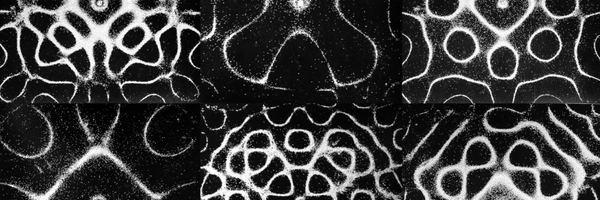
The Science behind Chladni Plates, showing resonance and sound through 2-dimensional shapes
CSEF · 2011
Visible Sound: Does the Surface Material Affect the Visible Patterns Created by Sound Vibrations?
CSEF · 2006
The Science of Music
CSEF · 2026
The Dancing Canvas: Decoding the Repercussion of Acoustic Frequency on Granular Patterns
CSEF · 2009
Glassic Music
CSEF · 2015
The Visualization of Sound
Closest projects by meaning, across every fair and year in the corpus.
Browse more like this
Source: California Science & Engineering Fair public projects