Traversing Mars: The Noctis Landing Human Exploration Zone
ISEF · 2025 Physics and Astronomy
Overview
NASA aims to send humans to Mars by the 2030s-2040s. A leading scientific goal will be the search for signs of indigenous life, past or present, which if found, would have major implications for science and the possibility of other life in the universe. "Noctis Landing", at 7.4°S, 93°W in the Noctis Labyrinthus region is a candidate landing site for this mission. The area around Noctis Landing presents several targets of interest for astrobiology, in particular: 1) a relict glacier, 2) a lava flow, 3) the giant Noctis volcano, and 4) the 'Pink Panther Pit', a possible thermokarst depression. This study aimed to identify viable paths for astronauts traveling in a pressurized rover to access these four targets of interest. Traverse planning was carried out using the Mars QuickMap data visualization and mapping tool, a NASA-supported computer program allowing different data sets from various Mars orbital missions to be displayed and examined. CTX visible imaging and MOLA laser altimetry data were used to identify paths with less than 20° slopes. CTX imaging data and THEMIS rock abundance data then helped refine paths to avoid major obstacles and minimize rough terrain, respectively. Viable traverse paths ranging between 0° and 17° in slope, avoiding major obstacles and minimizing rough terrain, were successfully identified for all four destinations. This study strengthens the case for Noctis Landing as a promising human landing site on Mars, and also validates a traverse planning approach that may be applied to other candidate landing sites.
Competition history
- ISEF 2025
Resources
Related projects
ISEF · 2026
Survey of the Noctis Volcano on Mars in Search of Stratigraphic Exposures and Caves Accessible for Exploration
ISEF · 2014
Mars Absolute Positioning System (MAPS): An Innovative Design to Advance the Exploration of Mars
ISEF · 2026
Autonomous Mars Rover for Real-Time Geological, Chemical, and Atmospheric Exploration
CYSF · 2025
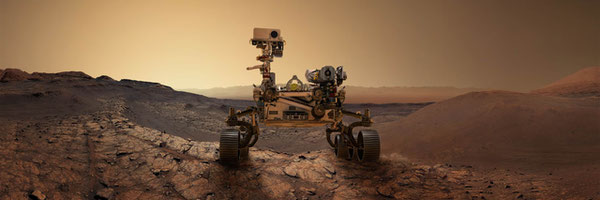
Red Planet Revolution: A Future Beyond Earth
ISEF · 2019
Optimization of Drone Flight Patterns for Use in Extraterrestrial Cave Mapping
CYSF · 2025

Experiencing Mars: Can it be our New Home ?
ISEF · 2017
Design of a Telepresence System to Operate at Mars Surface in a Pre-Colonial Context
ISEF · 2026
Thermal and Morphological Analysis of Lunar Lava Flows Using Machine Learning and Stefan-Boltzmann Modeling
Closest projects by meaning, across every fair and year in the corpus.
Browse more like this
Source: Regeneron International Science and Engineering Fair