The Spider Is Changing the Game in the Building Industry
Overview
This project aims to find an affordable, ecological and easy to apply solution for reducing the human and material losses caused by earthquakes, especially for poor countries. Our solution is to use an adhesive similar with the one produced by Araneus Diadematus spider species in the construction of buildings. Observing how a flying insect is caught in a spider web, we noticed that the kinetic energy of the insect is absorbed almost entirely by the adhesive that sticks the web threads. Using in building construction a biomaterial based on the model provided by the spider’s adhesive, that stiffens at the impact being able to absorb large amounts of kinetic energy generated by the buildings at the initial shock of an earthquake, will reduce the risk to collapse, the subsequent oscillations being eliminated. We conducted a multidisciplinary research and we have found that the stiffening at impact is given by a glycoprotein with a special molecular structure identified as being part of the adhesive composition, the adhesive acting as a seismic bumper. Other adhesive components may annihilate the Radon gas, the second cause of lung cancer in the U.S., and give it many remarkable properties. For producing the adhesive we designed a semi-living factory using biotechnology, multiplying the cells that naturally produce it and extracting it in a controlled environment – the production cost is 5 USD per liter, the productivity of 25 basic modules, having a surface of 50 x 50 cm, being around 6 liters of adhesive per day.
Competition history
- ISEF 2014
Resources
Related projects
ISEF · 2017
Mechanized Collection of Organic Spider Silk
ISEF · 2020
Biosuture: Recombinant Spider Silk Engineering with Anticancer Agent L-asparaginase
ISEF · 2017
Utilization of the Spidron System for Generating Force Absorbing Structures
ISEF · 2017
A Novel Approach to Prevent Damage from Earthquakes and Tsunamis with the Utilization of a Proportional Surface Hexagonal Structure and Modified Underground Two-Part Hexagonal Damping Rubber Bearing Base Isolator
ISEF · 2014
Safe and Sound Housing: Lime/Fly Ash Papercrete as a Substitute for Adobe in Seismically-Active Regions in Developing Nations
ISEF · 2020
Croc around the Block: Can Crocodilian Adaptations Reduce the Wind Loads on High-Rise Buildings?
ISEF · 2018
FEA Based Analysis of Spidron Fractal Structures in Force Absorption Applications
CYSF · 2026
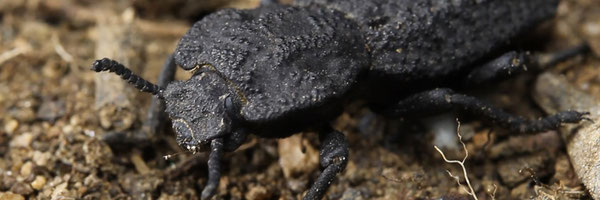
Ironclad aegis structure
Closest projects by meaning, across every fair and year in the corpus.
Browse more like this
Source: Regeneron International Science and Engineering Fair