The Development of a Hybrid Battery and Solar Panel System to Power an Ultra-lightweight Small Airplane
CSEF · 2014 Applied Mechanics & Structures
Overview
Objectives/Goals Currently airplanes must consume fuel to obtain the energy needed to fly. Is it possible to substitute electricity for gas to power an airplane? Is there enough energy produced from solar cells to power an airplane? The objective of this project is to construct a solar harvesting system for a model airplane, and to integrate the solar harvesting system on a model airplane, with and without a battery system. Methods/Materials First, to test if a model airplane I assembled can be powered by solar panels alone, I built a solar harvesting system. Four solar panels were soldered with wires and connected in parallel. The wires are connected to the Li-Po balance charger and the airplane power system. The four flexible solar panels were then installed on the wing. Tests were conducted. Second, I constructed an integrated hybrid battery and solar panel system by connecting a Li-Po battery with the Li-Po balance charger and the airplane power system and tested the performance of the airplane. Results The power generated from the solar panel system alone was not enough to move the airplane, but noise can be heard from the running motor. However, the energy generated from the integrated hybrid battery and solar panel system was able to power the airplane, and the airplane was able to successfully run on various surface, take off from concrete ground and fly in the air for less than one minute each time I tested the airplane. Conclusions/Discussion The experiments demonstrated that an integrated hybrid battery and solar panel system has the potential to generate enough power to fly an airplane. Since the efficiencies of current flexible solar panels on the market are low, the primary way to harvest more solar power is to increase the wing span. The weight increase due to solar panels installed, chargers, and wires, etc in a hybrid system would require additional power to fly the airplane. Increasing solar panel efficiencies is another area for further study to improve the viability of using solar power for airplanes.
Summary statement
I constructed a solar harvesting system for a model airplane and created an integrated hybrid battery and solar panel system that was able to generate enough power to fly the model airplane.
Help received
Father taught me how to use soldering tools. Advisor Mrs. Olivares proofread my report.
Competition history
- CSEF 2014
Resources
Related projects
CSEF · 2015
The Design of an Ultra-Lightweight Hybrid Solar-Powered Radio Controlled Aircraft
CSEF · 2006
The Cost Efficiency of Solar Power
CSEF · 2003
Soak Up the Sun
ISEF · 2022
Solar-Powered Drone: Creating an Airplane That Is Solar Powered and Autonomous
CSEF · 2008
Extending the Range of UAVs through the Use of Proton Exchange Membrane Fuel Cells and Other Renewable Energy Sources
CYSF · 2026
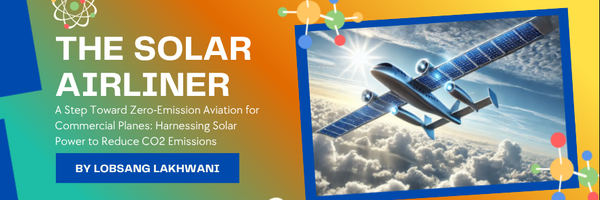
The Solar Airliner: Future of Sun Powered Commercial Aviation
ISEF · 2026
Design and Development of an Innovative Novel Hybrid Ionic-Electric Fixed Wing UAV: For Low-Noise, Sustainable, and Energy-Efficient Electric Aircraft Propulsion
CSEF · 2003
The Need For Speed: A Comparison of Solar Cells vs. Fuel Cells for Powering a Model Car
Closest projects by meaning, across every fair and year in the corpus.
Browse more like this
Source: California Science & Engineering Fair public projects