Testing the Habitability of Exoplanets
CSEF · 2014 Physics & Astronomy Fourth Award
Overview
Objectives/Goals The project objective was to determine out if there are any Exo-planets that could potentially support life. Methods/Materials Three criteria tested the planet#s habitability. The criteria are the Habitability Zone Composition (HZC), Atmosphere (HZA) and Distance (HZD). The HZC predicts whether a planet is likely to have soil. The HZA predicts whether a planet can hold an oxygen-based atmosphere. The HZD predicts whether the planet can hold liquid water based on the planet#s temperature. Data from the Exo-planet database was analyzed with the Habitability Zone criteria from the University of Puerto Rico at Arecibo Planetary Habitability Laboratory to find planets that could potentially support life. Results Out of 4,210 candidate planets in the database, only 2,740 had the sufficiently complete data to test all three criteria. There were 2,021 planets meeting the HZA, 1,403 meeting the HZC, and 51 meeting the HZD. I found 10 Exo-planets meeting all of the habitability criteria simultaneously. This was only 0.4% of the 2,740 planet candidates. Conclusions/Discussion Based on my results, I believe that there are planets that could be habitable. Since 10 planets met all three criteria, then there is a possibility that there is life out there. If I apply my finding to the entire galaxy, then I find something really interesting. Astronomers believe there are 100 billion stars in our galaxy. If you assume that every star has at least one planet around it and 0.4% of all of those planets meet the HZ criteria, then you discover there are about 400 million opportunities for life.
Summary statement
In this project I sought to determine if Exo-planets could support life and discovered that 0.4% of 2,740 Exo-planet candidates analyzed met all three Habitability Zone criteria.
Help received
My father helped with the excel spreadsheet analysis. I used data from the Exo-planet database. I consulted with Dr. Abel Mendez regarding my research. Equations were adopted from the University of Puerto Rico at Arecibo Planetary Habitability Laboratory.
Awards (1)
Competition history
- CSEF 2014
Resources
Related projects
ISEF · 2020
Atmospheric Oxocarbons: Implications on New Planets for Human Life
ISEF · 2022
Towards the Exploration of the Exoplanets: Studying Key Physical Parameters for the Habitability of Primitive Earth Using Climate Models
ISEF · 2021
Spatial Distribution of Known Exoplanets and Potentially Habitable Exoplanets within 100- Light Years from Earth
ISEF · 2015
The Periodic Effect of a Star's Change in Magnitude Due to a Planet's Transit: A Search for Habitable Planets
CYSF · 2026
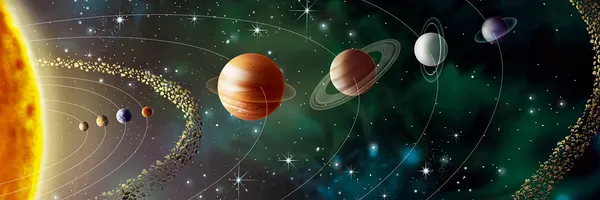
Out of this world! A study of the habitability of the planets.
ISEF · 2019
Plotting New Horizons: A Statistical Analysis of Potential Factors Influencing the Probability of Planetary System Formation
CSEF · 2016
A Search and Exploration of Multi-Exoplanet Systems Using Novel Photometric and TTV Algorithms for the K2 Mission
ISEF · 2018
Far Out! Analyzing NASA's Kepler Space Telescope Data Using the Transit-Timing Variation Method to Discover Additional Exoplanets in Planetary Systems
Closest projects by meaning, across every fair and year in the corpus.
Browse more like this
Source: California Science & Engineering Fair public projects