Perceived Negative Energy Density Hawking Radiation Near Black Holes: A Tensorial Derivation
ISEF · 2026 Physics and Astronomy
Overview
Reconciling general relativity and quantum field theory remains a central challenge in physics. Hawking radiation, a quantum effect where black holes emit radiation, provides a natural testing ground for this problem. While Hawking radiation has been widely studied, the impact of an accelerating observer on the perception of radiation is unknown, despite prior research suggesting it is an important variable to consider. To address this gap, I studied the Perceived Renormalized Stress-Energy Tensor (PeRSET), which incorporates the effects of acceleration when calculating the energy density and flux of Hawking radiation. Previous work computed the PeRSET only for simple black hole models. Therefore, I applied the PeRSET to more realistic models, including a charged, rotating, charged/cosmological, and non-singular black hole as well as a wormhole, modeling each black hole as forming from gravitational collapse. I discovered that sufficiently large acceleration leads to negative energy densities. This phenomenon occurs as there are two sources of radiation: radiation emitted from the black hole and radiation caused by acceleration. When the latter radiation dominates, they perceive negative energy densities. I also analyzed the divergent behavior of energy density and flux, finding that both quantities diverge to negative infinity inside a charged, rotating, and charged/cosmological black hole. By separating radiation into two sources, I clarified the origins of negative energy densities, demonstrating the impact of including acceleration. These findings constrain future theories and suggest that they should also incorporate the acceleration of an observer when studying quantum effects in curved spacetime.
Competition history
- ISEF 2026
Resources
Related projects
ISEF · 2019
Modelling Energy Extraction via the Penrose Process in Analog Black Holes
ISEF · 2016
An Analysis of the Gravitational Energy of Galactic Mass and Its Application to Dark Matter and Dark Energy
CYSF · 2025
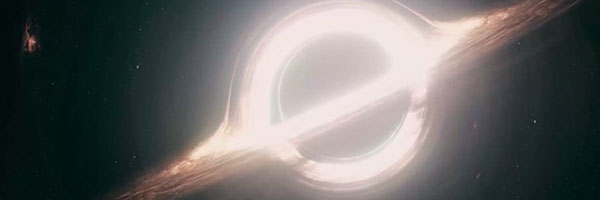
Hawking Radition Produced By Black Holes As A Sourse For Dark Energy
ISEF · 2026
Dynamic of Kerr Spacetime: Geodesics, Frame Dragging, and the Penrose Process
ISEF · 2017
On T-Reflection via Analytic Continuation in Quantum Mechanics
ISEF · 2026
Demonstrating a Potential Method for Black Hole Information Recovery via Simulated Hawking Radiation
CWSF · 2026
ΛCDM+S - Thermodynamic Cosmology: Simulating The Universe's Expansion Without Dark Energy
ISEF · 2024
An Analytical Method to Investigate High Dimensionality Signatures in Static and Spherically Symmetric Black Holes
Closest projects by meaning, across every fair and year in the corpus.
Browse more like this
Source: Regeneron International Science and Engineering Fair