Mycelium Might
CWSF · 2026 Agriculture, Fisheries & Food
Overview
My project is called Mycelium Might. It focuses on growing mushrooms using recycled materials. My goal was to address the bigger issue of pollution and the need for more sustainable food sources in the future. For my experiment, I used coffee grounds and cardboard as my growing materials. I chose these because they are everyday waste products that are easy to find, but can also be reused for growing mushrooms instead of being thrown away. During my experiment, I discovered that a mix of coffee grounds and cardboard grew significantly faster than the other samples. My project expands the possibilities for growing foods in more sustainable ways.
Video
This video could not be played here. Watch it on the original project page.
Why?
I chose this project because it incorporates so many things
I'm passionate about, such as recycling, sustainability, gardening, nutrition, and fungi. This project gave me a chance to connect all of these areas of interest in a practical way.
With the ever-growing threats of climate change, it's more important now than ever before to adopt a more sustainable lifestyle—one thing we can do to achieve that goal is recycling. Throughout my experiment I made a conscious effort to reuse as much as I could, for example the containers used for growing the mushrooms were old milk cartons, and the growing mediums I used were everyday waste products—coffee grounds and cardboard. I've tried to make my project environmentally friendly.
As long as I can remember, I have been intrigued by plants and nature. So, after receiving a mushroom growing kit as a gift, I developed an interest in fungi. I learned how important mushrooms are in the ecosystem; they improve soil health by breaking down organic matter and their underground networks help provide soil structure which helps retain moisture and nutrients.
On top of their environmental benefits, mushrooms are an amazing source of nutrients. They provide vital nutrients such as riboflavin (B2), niacin (B3), and pantothenic acid (B5) while being low in fat and calories. Mushrooms also contain high amounts of fiber which is good for gut health.
Ultimately, the main goal of my project is to show others how interesting, enjoyable, and environmentally sustainable growing mushrooms can be.
How?
1. Prepare the milk cartoons
cut all cartons 10cm from the bottom.
mark each container every 2cm from the bottom.
2. Prepare the carboard
rip the cardboard into approximately 2.5 cm chunks.
pasteurize the carboard by boiling it for 30 minutes.
strain the cardboard then squeeze out access liquid.
3. Prepare coffee grinds
boil the grounds for 30 minutes.
squeeze out the access liquid from the coffee grounds with a clean rag.
4. Plant
A. Coffee Grounds (x3)
fill the containers to the first line with coffee grounds
sprinkle with grain spawn
repeat to last line finishing with coffee grounds
label each pot, coffee grounds
B. Cardboard (x3)
fill the containers to the first line with cardboard
sprinkle with grain spawn
repeat to last line finishing with the cardboard
label each pot, cardboard
C. Mix
in three medium sized bowls mix 250g of each, coffee grounds and cardboard
fill the containers to the first line with the mixture
sprinkle with grain spawn
repeat to last line finishing with the mixture
label each pot, mixed
5. Store the prepared pots
spray the inside of each Stretch a Ziplock bag over each container, then store in a large storage bin.
6. Water
spray inside of storage bins daily aiming to keep the humidity level at 90%
spray inside of plastic bags weekly
7. Observe & Record
when mycelium reach the pinning stage remove the plastic bag
when mushrooms are ready for harvest collect and weigh them
What?
My experiment aimed to figure out if Black Pearl Oyster mushrooms
would yield a higher amount of fruit based on the type of recycled
substrate used. The substrates tested were coffee grounds, cardboard, and
a mixture of the two. My hypothesis that coffee grounds would yield the
highest amount was unsubstantiated as no mushrooms were harvested.
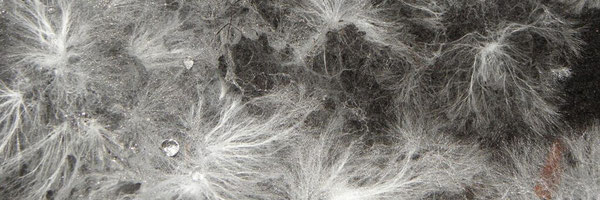
While the mycelium did not reach the fruiting stage, I did
however, observe significant differences in how the mycelium reacted to
each of the substrates. The containers holding a mix of cardboard and
coffee grounds were the most successful; the mycelium grew faster, looked
stronger, resisted bad mold better, and reached a higher stage of growth
than any other substrates.
Two weeks after recording data I noticed some
changes. Two cartons containing cardboard were
covered in white mold, one of the cartons
containing a mix had started to grow
mushrooms, and the other two mix cartons were
covered in white mold and seemed to have
"defeated " the green mold.
So What?
My project, Mycelium Might, focuses on growing mushrooms using recycled materials. While that might not sound very important at first, it connects to a much bigger issue—pollution and the need for more sustainable food sources in the future.
Through this project, I learned that mushrooms can be a starting point for more sustainable farming. With respect to my project, reusing is a key factor towards sustainability. Some of the things I did during my experimentation, in an attempt to be more eco-friendly, included getting used coffee grounds from a local cafe, using old cardboard waste as part of the substrate and using cardboard milk containers as pots for growing. I also attempted to reduce carbon emissions by purchasing the black pearl oyster grain spawn from a Canadian seller. If ideas like this are developed further, they could be used on a larger scale to help reduce waste and combat climate change.
What's Next?
Repeating this project, I would aim to improve sterilization methods, control humidity and airflow better, and allow more time for fruiting. These factors may have limited mushroom growth rather than the substrates themselves. I furthered my experiment by testing different ratios of cardboard to coffee grounds to identify the most effective mixture. Future research could investigate why the mixed substrate resisted contamination more successfully and whether recycled materials can naturally suppress harmful molds. Next steps would include optimizing environmental conditions, measuring decomposition efficiency, and exploring how mushroom cultivation using waste products could contribute to sustainable food production and landfill reduction.
Thanks
First, I want to give thanks to my teachers, Mr. page and Ms. hall for providing me with materials for my project and being great supports in preparing my project for the CWSF.
Next, I want to give thanks to my grandmother who provided me with cardboard for my project as well as letting me use her house to cultivate my mushrooms.
Finally, i want to give thanks to Mill Cove Coffee for providing me with the coffee grinds I used for my project.
References
Webpages:
North Spore. (n.d.). How to grow oyster mushrooms. North Spore. www.northspore.com
GroCycle. (n.d.). Growing oyster mushrooms at home. GroCycle. www.grocycle.com
Fat Fox Mushrooms. (n.d.). Oyster mushroom growing conditions. Fat Fox Mushrooms. www.fatfox.com
MycoBio. (n.d.). Black Pearl Oyster mushroom information. MycoBio. www.mycobio.co.nz
A Piece of Rainbow. (n.d.). Growing mushrooms on cardboard and coffee grounds. A Piece of Rainbow. www.apiceofrainbow.com
MeatEater. (n.d.). Beginner mushroom growing guide. MeatEater. www.themeateater.com
Books:
Gravel, E. (2020). Mushroom fan club. Drawn & Quarterly.
Images (7)
Awards (1)
- Selected for CWSF 2026
Competition history
- CWSF 2026
Related projects
ISEF · 2026
Waste to Worth: Developing Mycelium-Based Biodegradable Packaging From Agricultural Waste for Local Use
ISEF · 2022
Growing Sustainable Packaging Material With Mycelium and Agricultural Waste
ISEF · 2025
Mush N' Pack: Mycelium-Based Composite for Greener Packaging
ISEF · 2014
A Mycoremediation Study to Alleviate Eutrophication in Agricultural Watersheds
CWSF · 2026
Hungry Hungry Fungi: How plastic pre-treatments affect fungal interaction with LDPE and PET plastics
ISEF · 2026
Cultivating Pleurotus ostreatus on Mixed Cloth Waste to Grow Into a Biodegradable Styrofoam Alternative
ISEF · 2019
Accelerating Plant Growth to Improve Crop Production and Soil Fertility: Analyzing the Effects of Macronutrients and Mycorrhizal Fungi for Zea mays, Phase III
CYSF · 2025
Fungus Among us: implementing the bioremediation techniques of mycelium networks in water filtration
Closest projects by meaning, across every fair and year in the corpus.