Kirigami in Free-Fall: A New Variety of Parachute
Overview
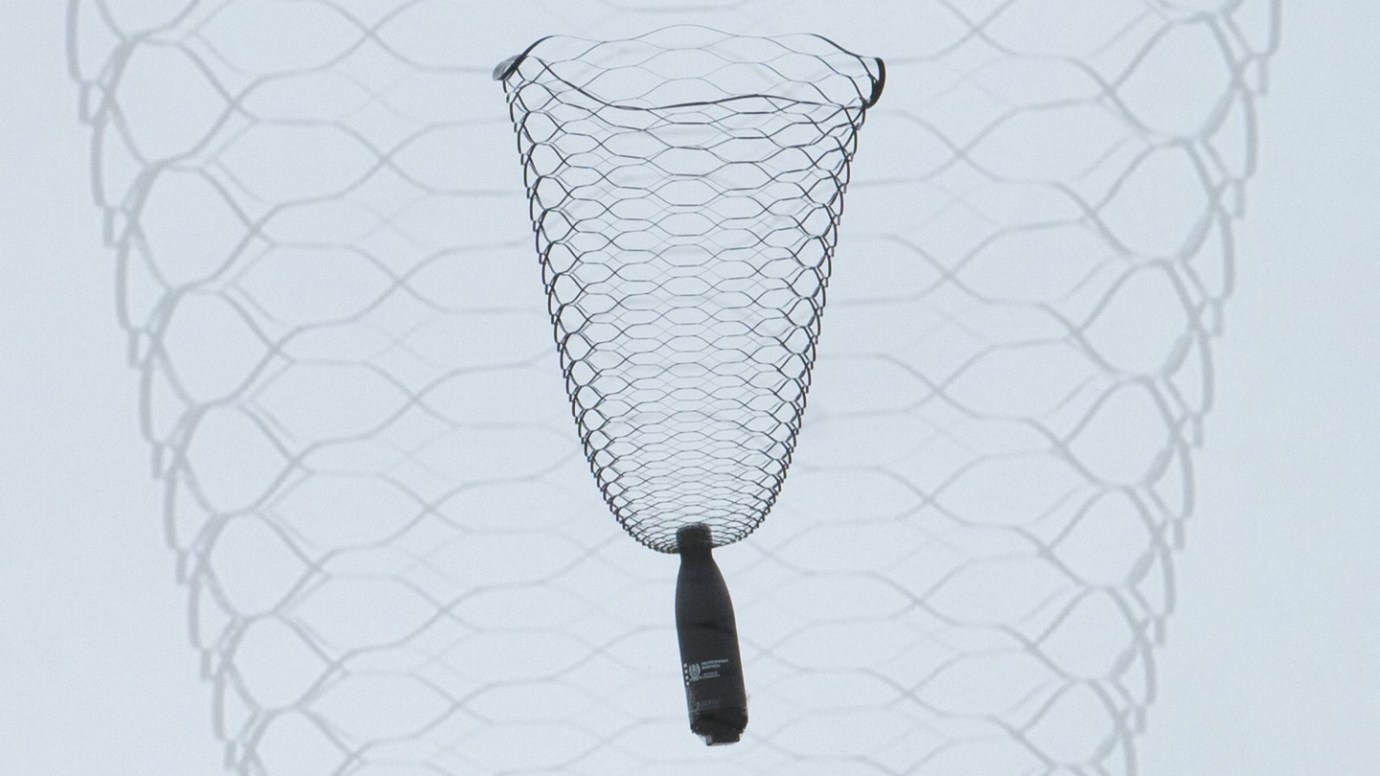
We are all familiar with the conventional parachute. However in recent years, a new variety of parachute — which draws elements from the Japanese art of kirigami, has been in development by scientists. This new variety of parachute involves the payload being directly connected to a disc with slits around a radial axis, which manipulate airflow to slow the payload's descent. Rather than utilizing expensive laser-cutting equipment generally used by scientists, I crafted my own kirigami parachutes from materials found at home as a low-budget alternative. I dropped the parachutes to test the facets of fall time and accuracy, as well as comparing them to those of conventional parachutes. This project proves that kirigami paracahutes are affordable to create, and that they can have various real-world applications, potentially allowing for major advancements in aerospace.
Video
This video could not be played here. Watch it on the original project page.
This video could not be played here. Watch it on the original project page.
Why?
Introduction:
In aerospace, parachutes have been very important, being utilized in many missions. Conventional industrial-grade parachutes are generally very expensive, tedious to manufacture, and may suffer from inaccuracy.
The kirigami parachute is deemed to be more accurate and possess greater vertical stability than conventional parachutes, also having been shown to be less expensive and simpler to create.
Scientists have generally used precise laser-cutting equipment to fabricate these parachutes, which is not easily accessible and has high operating costs.
With this in mind, I wanted to create my own kirigami parachutes using a minimal price approach, creating them by hand from materials found at home.
Purpose:
to determine the effectiveness of kirigami parachutes, comparing them to conventional parachutes, as well as show that they can be created using readily available and biodegradable materials.
How?
I conducted extensive research on how kirigami parachutes work. I brainstormed what suitable materials I could use from my house. I wanted to use at least one biodegradable material.
I ran two experiments over the course of this project. My first experiment used polypropylene page protectors and cotton from t-shirts (biodegradable), with the second experiment adding polyester as a material.
I created three distinct patterns each utilizing a unique slit layout, using a video by American Physical Society as inspiration. To create conventional parachutes, I followed an online tutorial. I drew the patterns on with a marker, cut the slits using scissors and used hot glue to attach small buttons to the center of the parachutes to act as a payload.
Testing:
The first experiment took place in my house’s kitchen. A drop height of 2.3 m was used. I used scotch tape to create the X for my target and to mark my drop height. I stood on a chair to reach the required height. I conducted 5 trials for each parachute.
The second experiment took place in my grandfather's shed. This time, the drop height was 3 m. I used permanent marker to create the X for my target and to mark my drop height. I created a pulley system using a rope and bucket to easily lift the parachute up after each trial. My mother remained at the floor to perform measurements. I conducted 10 trials for each parachute.
To measure fall time, I had my mother start the stopwatch when I gave her the cue to start as I simultaneously released the parachute, stopping it upon impact with the ground.
To determine accuracy, I had my mother measure the distance from the payload to the center of the X upon landing.
What?
Figure 1:
From the two materials, polypropylene parachutes were observed to have the slowest fall time.
From all parachutes, Polypropylene Conventional had the slowest fall time overall.
Relative to their material, conventional parachutes fell the slowest.
Out of the kirigami parachutes, Polypropylene Kirigami B had the slowest fall time.
Figure 2:
All kirigami parachutes are observed to land closer to the X on average compared to conventional parachutes in both materials.
Cotton Kirigami B displayed the greatest accuracy.
Figure 3:
From the three materials, polypropylene parachutes were observed to have the slowest fall time, followed by polyester and cotton.
From all parachutes, Polypropylene Kirigami B had the slowest fall time overall.
Relative to their material, conventional parachutes fell the slowest, with the exception of Polypropylene Kirigami B.
Figure 4:
In all materials, conventional parachutes were observed to have the greatest distance from X, denoting lower accuracy than the kirigami parachutes.
Kirigami parachutes made of polyester were less accurate than those made of the other materials.
Cotton Kirigami C displayed the greatest accuracy.
In all figures, cotton kirigami parachutes were observed to have similar measurements to one another; during the trials, the slits did not seem to capture the air effectively as the parachutes began falling. The parachutes would then shrivel up mid-air and prevent any drag from being created.
Kirigami B in polypropylene and polyester displayed similar measurements in both facets of fall time and accuracy, denoting similar behavior.
The results for polypropylene and cotton parachutes between the first and second experiments for were consistent, with values generally increasing relative to height.
Following statistical analysis, significant differences (p < .01) within groups for both aspects of fall time and distance from X were observed in both experiments.
So What?
Based on the results, it can be concluded that conventional and kirigami parachutes are effective in different ways; conventional parachutes are more practical to use in situations where a softer landing is a priority, while kirigami parachutes are more practical to use when an accurate delivery is needed. The varying results of the parachutes mean that different patterns can apply to different situations.
These results are important because with kirigami parachutes being a relatively new concept, they highlight the effectiveness of their fall time and accuracy. Furthermore, regarding the low-budget component of this project, it did demonstrate that kirigami parachutes can be created from the most basic of materials, although some materials are better to use than others.
Real-world applications for kirigami parachutes include but are not limited to:
Humanitarian supply drops; especially given ongoing world conflicts, the accurate and quick landings of kirigami parachutes can allow supplies to get to the right place as soon as possible to meet the needs of individuals.
Package delivery via payload release from drone; the accuracy of kirigami parachutes can ensure that packages released from drones do not end up in the wrong yard, while safely landing.
Deployment of weather dropsondes; landing accuracy is crucial when it comes to reaching the optimal location for weather measurements. Hence, the accuracy of kirigami parachutes may be beneficial for use in weather dropsondes.
What's Next?
There are a number of potential areas for further study:
using different materials
utilizing different payload weights
creating more varieties of slit patterns
testing the parachutes in adverse conditions such as wind
scaling the parachutes to different sizes
dropping the parachutes from a moving object
With these future contributions in mind, I want to further analyze the properties of kirigami parachutes to determine what other real-world opportunities it could be useful for. To do so, I will perform more trials which cover the listed circumstances above.
Thanks
Special thanks to:
Yvonne Dawe, for providing guidance and advice which helped me complete this project.
Amanda Craig, for providing further advice in the later stages of creating this project.
Amanda Miles, for helping locate supplies in my house in order to assemble the parachutes and assisting with the trials to complete them more efficiently.
Francis and Sandra Miles, for allowing me to use their shed as a space to perform my second set of trials.
References
American Physical Society. (2024, February 22). V007 Falling For The Physics Of Kirigami Parachutes. https://www.youtube.com/watch?v=CXU1vdjkIh4
Cotton Works. (n.d.). Biodegradability of Cotton. https://cottonworks.com/cotton-sustainability/biodegradability-of-cotton/
Jarman, S. (2025, October 1). Kirigami-inspired parachute falls on target. https://physicsworld.com/a/kirigami-inspired-parachute-falls-on-target/
Noe, R. (2025, October 9). Inexpensive, Inside-Out Parachutes Based on Kirigami. https: www.core77.com/posts/138862/Inexpensive-Inside-Out-Parachutes-Bas ed-on-Kirigami
Science Buddies. (n.d.). Make a Parachute. https://www.sciencebuddies.org/stem-activities/parachutes
Images:
Gosselin, F. (2025, October 1). [Picture of kirigami parachute in flight] [Photograph]. ScienceNews. https://www.sciencenews.org/article/parachutes-kirigami-japanese-art
Skydive California. (n.d.). [Picture of person landing using a conventional parachute] [Photograph] https://skydivecalifornia.com/blog/5-parachute-facts-types-parachutes/
Images (19)
Awards (1)
- Selected for CWSF 2026
Competition history
- CWSF 2026
Related projects
ISEF · 2019
Origami Paper Parachutes in HADR Operations
ISEF · 2019
Drones: Reducing Risks and Encouraging Participation in an Emerging Field, Utilizing a Parachute Deployment System
ISEF · 2018
Controlled Landing: Manipulating a Parachute to Determine the Landing Site of a Rocket
ISEF · 2026
Biomimetic Rotor Optimization for Passive Autorotation: Development of an Innovative Rotor Configuration for High-Precision, Controlled Descents During Aerial Delivery and Airdrop Operations
ISEF · 2019
Investigation of Falling Parachutes
ISEF · 2020
Investigating the Viability of a Deployable Parachute System with Aerial Detachment of the Cabin for Impending Commercial Airplane Crashes via a Novel Computer Simulation
ISEF · 2021
A Novel Computer Simulation of a Deployable Parachute System with Aerial Detachment of the Cabin for Commercial Airplane Crashes, Year Two
ISEF · 2021
A Novel Approach to Utilizing Collapsible Origami Structures in Weight Bearing Applications
Closest projects by meaning, across every fair and year in the corpus.