Investigating Urban Heat Islands Using Mathematical Models, Satellite Data, and On-Site Measurements
ISEF · 2020 Earth and Environmental Sciences
Overview
The urban heat island is an area of elevated temperature that is a result of fluxes that bring in or shed energy. During the day the energy input is radiation from the sun and the atmosphere and energy exits in five ways: into the ground, the atmosphere, evaporation, radiation, and reflection. Different surfaces will shed heat at different rates, each affecting surface temperature to a different extent. This project investigated the ways in which surface properties changed the balance of energy fluxes and thereby the surface temperature, predicting that the latent (evaporative) heat flux would be the largest driver of surface temperature on all scales. In the analysis of satellite data, the surface temperature of Colorado Springs was analyzed with respect to the vegetative cover, albedo (reflectivity), and elevation. On the scale of the city, all three factors were negatively related to surface temperature, but vegetative (evaporative) cover had the largest effect. A smaller scale analysis yielded similar results: evaporative surfaces were significantly cooler than non-evaporative ones. In this study reflectivity had no significant effect on temperature. Mathematically modeling surface heat fluxes once again resulted in evaporative surfaces being coolest. The model was built to explore how surface temperature and heat fluxes result in thermodynamic equilibrium. A fourth study investigated the merits of having a green/vegetated vs reflective roof. The green roof was cooler, but the reflective one was more cost effective and still decreased temperature. The results of the four studies could inform strategies to mitigate severe urban heat islands.
Competition history
- ISEF 2020
Resources
Related projects
ISEF · 2021
Spatial Pattern and Correlation Analysis to Understand the Relationship of City Structure on the Urban Heat Island (UHI) Intensity Across the US
ISEF · 2022
Quantification of Environmental Drivers Underlying the Changes in Urban Vegetation Across the United States
ISEF · 2015
Study of Heat Island Effect in Daegu Using Convergence Weather System
ISEF · 2019
Investigating How Water Vapor Emission Impacts the Temperature of the Troposphere
CYSF · 2025
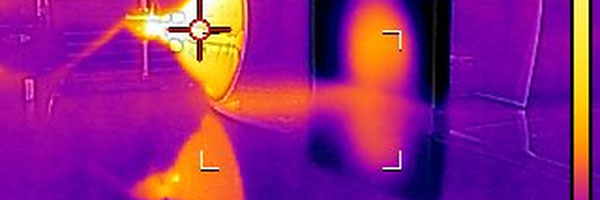
Heat Islands: Aggregate Size Analysis
ISEF · 2014
Secrets of San Lorenzo Valley's Atmosphere: Vertical Meteorological Measurements, Part Two
ISEF · 2015
Reducing the Environmental Impact of Roofing Shingles
ISEF · 2020
Effect of Cities on Normalized Differences of Land
Closest projects by meaning, across every fair and year in the corpus.
Browse more like this
Source: Regeneron International Science and Engineering Fair