Hydraulic Powered Robotic Cardboard Arm
CSEF · 2019 Applied Mechanics & Structures
Overview
Objectives The object of my project was to design a hydraulic powered robotic cardboard arm that followed the commands of hydraulic mechanisms while was supported with three different structural support designs. When the arm was performing the tests, I would observe how much the arm was supported by the different supports and which ones helped the arm perform the best without much deflection. I observed that my hydraulic system could have been set up better due to lack of direct following of control commands. Also, to get more precise results to help me improve, I would have to design qualitative tests rather than quantitative tests. Methods Cardboard, syringes, tubing (I used rubber but plastic is better), wooden skewers, hot glue, popsicle sticks, coat hanger wire, box cutter, drill, zip ties, paper clips, ruler, water, food coloring (optional). Cut cardboard pieces to correct sizes, drill holes in pieces and attach to correct pieces using skewers. Drill holes in syringe and attach to arm, make popsicle stick levers and connect with syringes. Pump water into tubing and syringes insuring no air enters. Test with different structural designs to see which added the most support without deflection and follow a certain criteria. Results My results were that the wire structural design worked the best when supporting the arm, and the popsicle stick design worked the worst when supporting the arm. My original hypothesis was wrong because I believed that the popsicle design would work the best because of its strength and ability to support and add coverage to most parts of the arm, but I encountered a mistake. The skewers got in the way of the popsicle sticks so they couldn't provide complete coverage to the cardboard. The wire did the best because it could easily bend around this skewer obstacle. The cardboard got second place in support, which I imagined would do the worst because its lack of support. It was mainly just the control. Conclusions I would say my results did surprise me, but there is a lot to improve and change. I have learned a lot from this project, and not only from my tests but my research as well. In my research I have discovered the many ways hydraulics can be used in prosthetic arms and other limbs, not just as a mechanism that powers the whole design. I learned my project tested a couple variables that made the testing complicated when I should have been breaking it down into smaller chunks to test. Like testing the strength and deflection of the cardboard and other designs before hand and give me more qualitative results. I would also choose to use
Summary statement
I created and designed a hydraulic powered robotic cardboard arm that was supported by different materials to increase the strength and efficiency of the arm.
Help received
None. I designed and built the arm myself with inspiration from previous projects.
Competition history
- CSEF 2019
Resources
Related projects
CSEF · 2018
Hydraulics: Effect of Mechanical Advantage and Range of Motion
CYSF · 2025

Hydraulic Cardboard Robotic Arm
CYSF · 2026
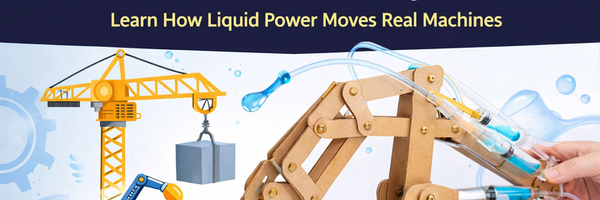
Hydraulic Powered Robotic Arm
CSEF · 2018
Automaton Arm Prototyping
CSEF · 2017
Assistive Robotic Mechanism 2
CSEF · 2017
Pneumatics vs. Hydraulics
ISEF · 2024
A Multi-Usage Hydraulic Powered Underwater Robot Arm
CYSF · 2025

Hydrolic Robotic Arm
Closest projects by meaning, across every fair and year in the corpus.
Browse more like this
Source: California Science & Engineering Fair public projects