How does city lights start pollution?
CYSF · 2026
Overview
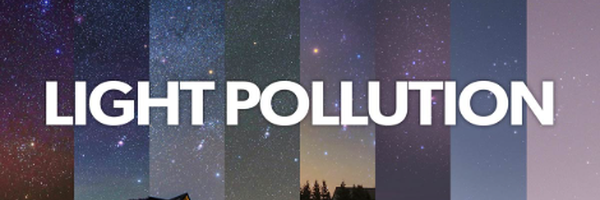
When we over-light, fail to use timers and sensors, or use the wrong colour of light, we can negatively affect many parts of our world, impacting migratory birds, pollinators, sea turtles, and mammals, including humans.
Problem
Most environmental pollution comes from Humans and their inventions. For example, people make waste. They also make other pollutions, like air pollution but what about light pollution? Light pollution, is a daily problem in our lives. We are living under the nighttime glow of artificial light and that causes a significant environmental crisis. By erasing the natural darkness of the night, this phenomenon disrupts ecosystems, impacts human health, and wastes vast amounts of energy. When you use artificial light more than needed it can cost more than it seems. This issue affects animals too, they depend on the pitch black sky to guide them to their destination, it disturbs reproduction, animal behavior changes, ecosystem imbalance, and far more. We do not want our beautiful night sky to be ruined by the overuse of artificial light. U.S. outdoor lighting creates about metric tons of carbon dioxide(CO₂) emissions every year. Light pollution is growing at twice the rate rate of the population and it is doubling every eight years. In some places scientists predict that no stars will be visible in 20 years. Any kid who is under 18 will be unable to see 50% of the stars in the sky. So when you think that light pollution isn't a big deal it really is because more than 80% of the world's population lives under skyglow.
Method
Well, how do we fix this problem? Protecting the night sky starts with you! Now, here are ways to prevent light pollution. First, use energy efficient bulbs and only use light when needed. We can reduce light pollution in another way, shield lights and direct them down. Additionally, choose warm white light bulbs. You could even close curtains or blinds at night to prevent indoor lighting from contributing to sky glow. Set lights to only turn on when needed, such as with motion sensors, rather than leaving them on all night. Since stars will go away in about 20 years, we want to reduce pollution so that will never happen because imagine when we grow up and have kids they will ask stuff like "Mama/Papa, what is a star?" that would be very sad if that happened. It is time to be more conscious, both individually and collectively, to protect our environment from the overuse of artificial light.
Research
In our research we learned and studied about how streetlights and city lights can impact everyone, even animals, people, scientists, and many more. Now, here are some websites we used to study light pollution.
Sites we researched on:
• https://darksky.org/resources/what-is-light-pollution/
• https://education.nationalgeographic.org/resource/light-pollution/
• https://science.nasa.gov/solar-system/skywatching/night-sky-network/februarys-night-sky-notes-how-can-you-help-curb-light-pollution/
•
Data
Light pollution | Cause | Solution to the problem |
Buildings | Does not use curtains | Use black curtains to prevent artificial light |
Street Lights | Don't point down | Design the lights to point down and use motion sensors to detect whether a car or human is nearby |
City Lights | Uses big amounts of light | Use curtains to cover artificial light + use light only when needed |
Vehicles | Light faces the front | Light must face the ground |
Conclusion
We found out that our hypothesis was close to the results, which means that city lights can cause pollution by creating light pollution(specifically skyglow). We learned that it can disrupt ecosystems, impact human health, and waste vast amounts of energy. Using extra lighting can consume enormous amounts of energy, causing problems. Boats, buildings, vehicles, street and city lights, and even fireworks make the issue worse. Light pollution affects our ability to see the night sky. Light pollution contains seven forms and levels, including glare, light trespass, over lighting and uplight which leads to energy waste and skyglow.
Citations
Creator | Website | Website link |
Does not show | Nasa | nasa.gov |
Does not show | Natural Geographic | https://education.nationalgeographic.org/resource/light-pollution/ |
Does not show | Dark sky international | https://darksky.org/resources/what-is-light-pollution/ |
Acknowledgement
We would both like to thank our wonderful teacher Mrs. Karen Spelay, for providing our board and all of our resources for our project. We would also like to thank our parents for providing all of the paper and the printer where we printed all of the writing for our tryfold. So we thank them very much!
Awards (1)
- BRONZE
Competition history
- CYSF 2026
Resources
Related projects
CYSF · 2025
How Can We Fix Light Pollution?
ISEF · 2018
The Dark Side of Light: The Potential Impact of Artificial Light on Libellulid Feeding Behavior and Activity
ISEF · 2024
Effects of Urbanization on Moth Mating Behavior: Insights From Street Lighting Exposure
ISEF · 2024
Can Light Pollution Color Impact Melatonin in Mallows or Metamorphosis?
ISEF · 2022
Skyglow in American Samoa
ISEF · 2019
The Effect of Chronic Exposure to Artificial Light at Night on the Development & Fecundity of Manduca sexta
ISEF · 2019
Assessing the Effect of Light Pollution on Courtship Behavior of Drosophila melanogaster
ISEF · 2023
Does Constant Blue or Orange Light Accelerate Butterfly Development?
Closest projects by meaning, across every fair and year in the corpus.
Source: Calgary Youth Science Fair