GCORE: Glioblastoma-Related Chimeric Antigen Receptor T Cell Therapy Outcome Re-Engineering
ISEF · 2026 Computational Biology and Bioinformatics
Overview
Brain cancer, or glioblastoma, is one of the most aggressive cancers, given the nutrient-dense environment of the brain. This cancer is very deadly, given the significance of the brain for the body's functionality. Most glioblastoma treatments use chemotherapy, which has a life expectancy of 10 months. Newer treatments like CAR-T cell therapy using antigen-seeking T cells are more promising, with 15-month survival rates (trial NCT0317014), but still show tumor relapse. To understand why relapse occurs, the literature points to hypoxia-related phenotypic persistence. Hypoxia was modeled in Python based on Gauss's law for electricity, but applied to oxygen diffusion; the interior of a tumor reaches low oxygen levels (~0 mmHg). Modeling produced similar results, as the tumor grows, its expansion outpaces oxygen intake within the interior, leading to cell stress and death. To survive, interior cells activate HIF1-a, suppressing the tumor's signature antigen GD2, making cells unrecognizable to most CAR T therapies, and instead express CAIX (preventing denaturation). Treatment and tumor interactions were modeled in Physicell, according to prior glioblastoma research. A baseline GD2-targeted CAR T simulation resulted in only a 1.3% reduction in the hypoxic niche. Additional treatments were then engineered, including CAIX-targeted CAR T cells, HIF1-a inhibition, and hyperbaric oxygen manipulation. Dual T-cell modification targeting both GD2 and CAIX antigens, combined with HIF1-a inhibition, showed the most promising results, achieving 99.3% tumor reduction over the 14-day trial period. While this model is not perfect, it provides a realistic framework for testing cancer treatments in silico, offering a powerful alternative to expensive and time-consuming clinical testing.
Competition history
- ISEF 2026
Resources
Related projects
ISEF · 2024
CRISPR Gene Edited Glioblastoma Multiforme Cell Line as a Model for Testing Antigen Specificity of CAR T-Cell Therapy
ISEF · 2026
Protein Assassins: Screening for Improved Degraders to Reverse Tumor Immortality
CYSF · 2025
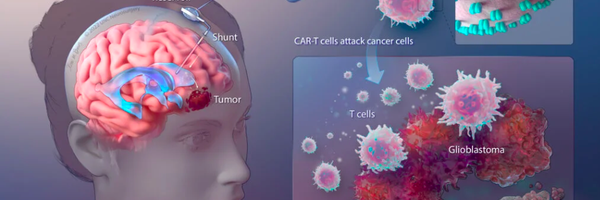
Life Saving Discovery for Brain Cancer Through Multi-Targeting CAR-T Therapy
ISEF · 2025
Molecular Arsonists: Degrading Oncogenic Transcription Factors to Reverse Tumor Cell Immortality
ISEF · 2026
ReinforCell - Reinforcement Learning Solution to Engineer Robust CAR-T Cells for Cancer Patients
CWSF · 2026
Brain-Penetrating Bioconjugate M13-CTX-PEP-1 for Targeted Glioblastoma Therapy In Silico
CWSF · 2026
AAV Based Combination Therapies to Improve Glioblastoma Treatment Efficacy
ISEF · 2024
Predicting Patient Response to CAR-T Cell Therapy Using Computational Methods for Biomarker Identification
Closest projects by meaning, across every fair and year in the corpus.
Browse more like this
Source: Regeneron International Science and Engineering Fair