Friction
CYSF · 2026
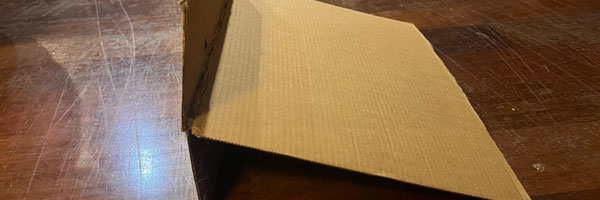
Overview
I am experimenting on different carpets that are made of different materials if that affects how much friction there would be on an object
Hypothesis
My hypothesis is that the materials which are smoother will have less friction and the materials which are rougher will have more friction. I think this because the smoother surfaces have less friction than rough surfaces is because have less resistance than the rough surfaces.
Research
For my background research, I researched what friction was. I found that friction is the force that opposes the applied force on an object. My sources are https://openstax.org/books/university-physics-volume-1/pages/6-2-friction, https://www.nasa.gov/wp-content/uploads/2024/09/friction-cc-final-9-24-24-508.pdf?emrc=04f0e7, https://phet.colorado.edu/en/simulations/forces-and-motion-basics, https://www.sciencebuddies.org/stem-activities/notepad-friction, https://kids.britannica.com/kids/article/friction/442495, and https://www.ucalgary.ca/sites/default/files/teams/229/december2017_colloquium_robbins.pdf
Variables
My controlled variables are the ramp, ball, angle, temperature of the room, and the area I did the experiment in. The manipulated variable in my project was the material I tested. The responding variable in my project is the distance that the ball traveled.
Procedure
My procedure is to 1. Make a ramp out of cardboard 2. Test the ball on the materials ( cardboard\, jupe\, cotton\, plastic\, paper\, and tinfoil) 3. To record my finding of what happened when I rolled the ball down the ramp.
Observations
My observations were that the smoother surfaces, such as plastic and cardboard, had less friction than the surfaces with rougher textures such as jupe and cotton. The material with the least friction was plastic, then cardboard, then paper, tinfoil, cotton and lastly jupe.
Analysis
For my project I used a small ball to roll it off of the 20 degree ramp. For each material I did two trials. After the ball rolled down the ramp I waited until it stopped and then I measured how far it went.
Conclusion
In conclusion, the material that had the least friction is plastic, then cardboard, then paper, tinfoil, cotton, and lastly jupe. Then ball rolled the farthest with the plastic because the plastic is the one with the least friction.
Application
This project is useful because if you wanted to learn which materials have more friction than others then you would know because of my project. Also, if you wondered if different materials have more friction, then you would figure out with help from my project.
Sources Of Error
Possible sources of errors are the measurements because I rounded the numbers. Another possible error that could have happened is the ball could have gotten moved either farther of closer to the ramp which would make the measurement inaccurate.
Citations
My citations were https://openstax.org/books/university-physics-volume-1/pages/6-2-friction, https://www.nasa.gov/wp-content/uploads/2024/09/friction-cc-final-9-24-24-508.pdf?emrc=04f0e7, https://phet.colorado.edu/en/simulations/forces-and-motion-basics, https://www.sciencebuddies.org/stem-activities/notepad-friction, https://kids.britannica.com/kids/article/friction/442495, and https://www.ucalgary.ca/sites/default/files/teams/229/december2017_colloquium_robbins.pdf
Acknowledgement
My acknowledgements are to my parents for helping me with my project and to my sisters for letting me use their computer to type out everything for the project.
Awards (1)
- HONOURABLE MENTION
Competition history
- CYSF 2026
Resources
Related projects
CYSF · 2026
Wired To Work
CYSF · 2026
Improving Grip Performance in an Articulating Model of Prosthetic Hand Using Different Materials
CYSF · 2026
Defying gravity (The uphill roller)
CYSF · 2025

Temperature vs Viscosity
ISEF · 2024
Minimizing the Impact of a Constant Force Using Metals
ISEF · 2019
What Material Is the Most Shocking?
CYSF · 2026
Buoyancy
ISEF · 2024
Finding the Optimal Stickiness of a Table Tennis Paddle to Produce the Most Spin
Closest projects by meaning, across every fair and year in the corpus.
Source: Calgary Youth Science Fair