Development of a Urinalysis Immunoassay for Cortisol Detection
Overview
One of the most common health problems across the globe is the imbalance of hormones in the human body. However, although many suffer from such imbalances, most often, the affected people cannot tell that they have this ailment. This is because the symptoms of a hormone imbalance are often inward symptoms that do not become evident until extreme circumstances arise. Cortisol is the hormone in the human body that regulates stress levels. When cortisol becomes imbalanced, it can cause changes in a person’s blood pressure, muscle strength, and energy levels. The purpose of this project was to create a test strip that can easily measure a person’s general cortisol levels. This was done by finding a chemical with an observable reaction that changes depending on cortisol level. First, the cortisol was tested for its pH, boiling point, and other chemical properties. Then these properties were used to create a list of chemicals that could possibly react with the cortisol. The chemicals chosen were added to a cortisol dilution and observed to see if a chemical reaction occurred. After, each was applied into a test strip that could measure if the hormone was present. This study resulted in the creation of a test that successfully measures the general level of cortisol in a human’s urine or saliva in an efficient and inexpensive manner.
Competition history
- ISEF 2019
Resources
Related projects
ISEF · 2020
Developing a Lateral Flow Immunoassay for Cortisol Detection, Year Two
ISEF · 2025
A Novel Flow-Based Amine-Conjugated Gold Nanoparticles as a Sensor for Salivary Cortisol Detection
JSHS · 2020
Developing A Urinalysis Immunoassay for Cortisol Detection Year 2
ISEF · 2018
Novel Warning Mechanism for At-Risk Stroke and Epilepsy Patients Through Detection of Harmful Levels of Cortisol
ISEF · 2024
Designing a Cost-Effective Lateral Flow Assay for Hypercalcemia Detection and Formulation of Therapeutic Supplements to Modulate Serum Calcium Concentrations
ISEF · 2023
Ovydrome's Catch: A Biosensor for the Early Detection of Polycystic Ovarian Syndrome With and Approach to Prevent Further Gynecological Cancers
CYSF · 2025
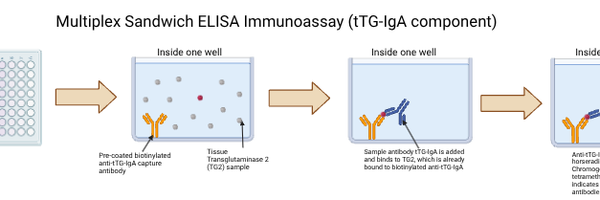
Designing an Immunoassay for Celiac Disease Detection In a Clinical Setting
ISEF · 2024
Gyno-Genix: A Quadrupled Biosensor for the Early Screening of Multiple Gynecological Problems
Closest projects by meaning, across every fair and year in the corpus.
Browse more like this
Source: Regeneron International Science and Engineering Fair