CCUS (Carbon Capture Utilization and Storage)Optimazation Via Solar-Powered Robots
CYSF · 2025
Overview
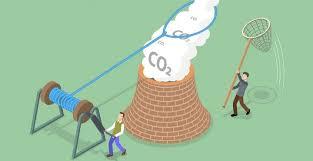
This project explores how solar-powered robots can enhance CCUS in Alberta by making CO₂ capture and storage more efficient. AI-driven robotics help reduce costs, improve accuracy, and make the process more sustainable.
Problem
Maintaining CCUS structure requires frequent monitoring and repairs, which increases operational costs.Also monitoring manually has a higher chance of risk and danger, as there might be gas leakages that could be deadly.
Method
AI-driven solar powered automation can improve efficiency and reduce maintenance costs while ensuring safety.Using such robots saves 50% to 70% of the operational costs,detecting leaks becomes easier and faster, and increase the overall efficiency of the process of capturing.storing and utilizaing carbon gas.
Research
What is CCUS?
CCUS involves three main stages:
1.
Capture: CO2 is separated from industrial emissions using chemical absorption, physical adsorption, or membrane-based technologies.
2.
Utilization: The captured CO2 is repurposed for applications such as enhanced oil recovery (EOR), synthetic fuels, and construction materials.
3.
Storage: CO2 is transported and stored in geological formations like depleted oil and gas reservoirs or deep saline aquifers.
CCUS in Alberta
Alberta is a major hub for CCUS due to its high industrial emissions and vast geological storage capacity. The province is home to several large-scale CCUS projects, including the Alberta Carbon Trunk Line and Quest CCS. These projects aim to reduce emissions from industries like oil sands, cement, and petrochemicals. Taking into account the challenges/problem mentioned eirlier, the use of solar-powered AI-driven robots to enhance CCUS operations. The robots perform key tasks such as monitoring, automation, and maintenance with minimal human intervention.
How Robotics Enhances CCUS:
1.
Autonomous Monitoring: Robots equipped with sensors can detect CO2 leaks, measure temperature variations, and assess storage site integrity.
2.
Automated Capture and Transport: AI-powered robots optimize CO2 capture and facilitate safer transportation by analyzing data in real-time.
3.
Efficient Maintenance: Robots reduce operational downtime by conducting inspections and repairs in hazardous environments.
4.
Solar-Powered Sustainability: Using solar energy minimizes additional emissions from the robots, making CCUS more environmentally friendly.
The Role of Solar Power in CCUS Robotics
Solar energy plays a crucial role in making robotic CCUS operations more sustainable. By integrating solar panels into robotic systems, CCUS can be optimized in the following ways:
•
Energy Independence: Solar power eliminates reliance on fossil fuel-based energy, reducing carbon footprints.
•
Continuous Operation: With battery storage, robots can function even during low sunlight periods, ensuring uninterrupted CCUS monitoring and maintenance.
•
Cost Reduction: Once installed, solar power significantly lowers operational costs compared to traditional fuel sources.
•
Scalability: Solar-powered robotics can be deployed in remote locations without needing an external power supply, making CCUS more feasible in diverse environments.
AI in CCUS Robotics
Artificial Intelligence (AI) enhances robotic efficiency in CCUS by:
•
Predictive analytics: AI algorithms analyze large datasets to predict CO2 leaks, optimize capture rates, and improve storage site selection.
•
Autonomous decision-making: Robots use AI to navigate sites, detect issues, and adjust processes without human intervention.
•
Machine learning improvements: Continuous data collection helps robots improve accuracy in detection and maintenance tasks.
Feasibility Study: CCUS with vs. Without Robotics
A comparison of traditional CCUS and robotics-assisted CCUS reveals significant advantages:
Factor | Traditional CCUS | CCUS with AI-Driven Robotics
Energy Consumption | High (fossil fuel-based) | Lower (solar-powered)
Cost Efficiency | Expensive maintenance & labor | Reduced operational costs
Monitoring & Safety | Manual inspections | AI-driven automated monitoring
Environmental Impact | Relies on fossil fuels | Uses renewable energy
Scalability | Limited by cost & labor | More adaptable & scalable
CO2 Storage Security | Requires frequent checks | Real-time leak detection
Real-World Applications of Robotics in CCUS
Several countries are integrating robotics into CCUS operations:
•
Scotland: AI-driven drones monitor CO2 storage sites in the North Sea.
•
United States: Robotics assist in pipeline inspection and automated data collection for CO2 transportation.
•
Canada: Alberta-based projects are testing robotic automation for CCUS facility monitoring.
Data
1. Feasibility Study Data
•
Cost comparison:
•
Traditional CCUS: ~$65–100 per ton of CO2 captured
•
CCUS with solar-powered robots: ~$45–75 per ton of CO2 captured
•
Energy consumption:
•
Traditional CCUS: ~200–300 kWh per ton of CO2
•
CCUS with solar-powered robotics: ~150–200 kWh per ton of CO2
2. Case Studies and Real-World Applications
•
Quest CCS (Alberta): Captures ~1.2 million tons of CO2 annually.
•
AI-driven leak detection: Reduces monitoring costs by ~30%.
•
Automated maintenance robots: Reduce repair downtime by ~25%.
3. Efficiency and CO2 Capture Rates
•
Traditional CCUS capture efficiency: ~85% CO2 removal.
•
AI-optimized capture efficiency: ~95% CO2 removal.
4. Environmental Impact Reduction
•
Solar power integration reduces fossil fuel reliance in CCUS operations by ~40%.
•
AI-optimized energy use lowers electricity demand for CCUS by ~20%.
Conclusion
The integration of solar-powered AI-driven robotics into CCUS presents a transformative approach to reducing carbon emissions efficiently. By lowering energy consumption, improving monitoring accuracy, and reducing operational costs, this innovation can enhance Alberta’s CCUS initiatives and serve as a model for global adoption. Future research should focus on optimizing robotic designs, improving AI algorithms, and conducting real-world pilot tests to validate this approach.
Citations
• https://www.alberta.ca/alberta-carbon-capture-incentive-program
• https://www.alberta.ca/carbon-capture-utilization-
and-storage-how-it-works-and-benefits
• https://www.aiche.org/ccusnetwork/what-ccust
• https://natural-resources.canada.ca/science-and-data/funding-partnerships/opportunities/grants-incentives/energy-innovation-program/ccus-rdd-call/23815
• https://www.reuters.com/business/energy/oil-producer-strathcona-partners-with-canada-growth-fund-carbon-capture-2024-07-10/?utm_source=chatgpt.com
• https://www.reuters.com/sustainability/climate-energy/bill-gates-firm-gives-40-mln-canadian-carbon-tech-test-bed-2024-12-18/?utm_source=chatgpt.com
• Why the cost of carbon capture and storage remains ...
International Institute for Sustainable Development
https://www.iisd.org › system › files › bottom-lin...
Acknowledgement
I am still working on it.
Awards (1)
- HONOURABLE MENTION
Competition history
- CYSF 2025
Resources
Related projects
ISEF · 2023
Net Direct Air Capture: Novel Contact Liquid-Based Approach for Efficient, Cost-Effective, and Scalable Cryogenic Carbon Capture
ISEF · 2023
Innovative Use of Nanoparticles Against Industrial CO2 Emissions
CYSF · 2025

A Look Into Effiecent Carbon Capture
ISEF · 2025
Devising Metal-Organic Framework Technology for Scalable Direct Air Capture of CO2
ISEF · 2024
Towards a Closed Carbon Cycle: Novel Organic Microparticles & Encapsulants for Carbon Dioxide Capture & Conversion to Value Added Products
ISEF · 2018
Creating a Cost-Efficient Water Soluble Carbon Capture System for CO2 Emitting Vehicles to Increase Biofuel Production Efficiency
ISEF · 2018
Storing CO2 in Unconventional Gas Reservoirs Through the Development of an Optimum Hydraulic Fracturing Design
ISEF · 2026
Design and Evaluation of an Energy-Efficient CO2 Capture System Utilizing Sodium Hydroxide for Ammonium Bicarbonate Fertilizer Synthesis
Closest projects by meaning, across every fair and year in the corpus.
Source: Calgary Youth Science Fair