Breathing under the influence
CYSF · 2026

Overview
This project will explore and investigate the effect vaping has on the respiration rates of humans. By analyzing existing scientific research between individuals who vape versus individuals who do not, I will explore how significant an impact vaping has.
Problem
My question is: How does vaping affect individuals respiration rates with or without vaping?
My hypothesis is: If individuals vape then their respiration rate will be higher because of the high amount of nicotine inside the vape.---Some symptoms of vaping are coughing, and shortness of breath which can make your respiration rate higher and nicotine causes these symptoms.
If individuals don’t vape then their respiration rate will be lower because they do not consume nicotine that is inside the vape. — Nicotine is the thing that makes your respiration rate higher because of its symptoms so if individuals don’t vape then they don’t consume the type of nicotine in vapes so there is a high chance their respiration rate is lower than the average person who vapes daily.
Method
I will research how vaping affects individuals who vape and individuals who don’t and see the similarities and differences. How I will find the answer to my question is to find and analyze data that I will source from the internet. I looked at a study and their charts and results and methods and compared the different groups. The study is :Smoking e-cigarettes and the effect on respiratory symptoms among a population sample of youth: Rectrospective cohort study
https://www.tobaccoinduceddiseases.org/Smoking-e-cigarettes-and-the-effect-on-respiratory-symptoms-namong-a-population-sample,156839,0,2.html
Research
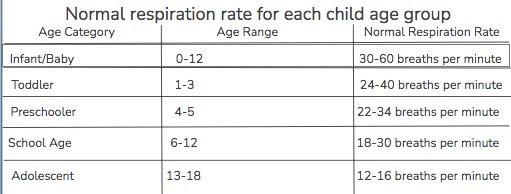
The average respiration rate for an adult at rest is 12 to 20 breaths per minute. If an adult’s respiration rate is under 12 or over 25 breaths per minute, that may be a sign of a health condition. How individuals check their respiration rate is by: finding a comfortable spot and sit or lying down. Then put a timer on for one minute then put your hand on your chest and breath and count how many breaths you take for 1 minute. What conditions can affect your respiration rate is: asthma, anxiety,pneumonia, heart disease, lung disease, and substance use disorder. Vaping is when you use a small, handheld electronic device(like vapes, vape pens or mods) to inhale a mist of nicotine and flavor(e-liquid). It's similar to smoking but vaping warms up little particles out of a liquid instead of burning tobacco like cigarettes. An vape or other vaping devices heat up the liquid in the device to create an aerosol. Mist from vapes contains particles of nicotine, flavor and other substances suspended in the air. You breath these particles into your mouth from the mouthpiece, where they go down your throat into your lungs. What vaping does to your lungs is the particles you inhale from vaping can cause inflammation(swelling) irritation to your lungs. This can lead to lung damage like scarring and narrowing the tubes that make that bring air in and out of your lungs. Side effects of vaping are: coughing, shortness of breath, eye irritation, headaches, dry and irritated mouth and throat, and nausea. An e-cigarette is another word for a vape. One JUUL pod is equal to one box of cigarettes, Vaping is an addiction. Vapes were developed in China and came into the US market in 2007. It trended really fast. In 2015 the JUUL was created. That's when they saw an increase in teenage use. It was sleek and easy to hide and it had flavors that applied to the younger audience. They are so popular because they have so much nicotine in them that kids are getting high from it. 1 JUUL pod is equal to 1 pack of cigarettes. JUUL advertised young, fashionable models and hired influencers to promote their product. Nicotine can be really addictive to young people because their brain doesn’t fully develop until the age 25. There are 3 types of vape addiction: nicotine addiction, device addiction, and flavor addiction. Some symptoms of vaping are: coughing,shortness of breath and sometimes anxiety. The chemicals in vapes contain 99% nicotine and heavy metals like nickel,lead,tin and flavors. Vaping is more dangerous than smoking because of the high amounts of nicotine that is in it. The flavorings are causing affects and the nicotine is causing the addiction.
Data
Measures
The main thing the researchers measured was called”pack-equivalent years”. This is a strategy to find out how much a person has vaped over time. To calculate it, researchers asked:
• Smoking Status
• If the person had asthma. - Alcohol or cannabis use in the past month
• How many puffs a person takes each day when they vape
• How many days they vaped in the past 30 days
• How old they were when they first started vaping
They used this information to calculate how much vaping the person had done over the years. The main thing that was studied respiratory symptoms. Participants had to say whether they had any of these 5 symptoms in the last 4 months:
• Regular coughing - Wheezing during exercising or walking up the stairs
• Getting consistent colds that take a long time to go away
• Coughing up mucus (phlegm)
•
Feeling out breath doing simple tasks
•
Researchers also asked to vapers about:
• What type of vaping device was used
• How long the person had been vaping
• Personal information like: age, gender, education, race, and province
• If they had asthma
This information helps researchers better understand the person’s health
Statistical Analysis Researchers used a math method called “Poisson regression” to study how vaping affects breathing problems. This strategy helped researchers compare how often respiratory symptoms happened in different groups. They looked at: * How often people used vapes * How often they vaped
They also analyzed current vape users to see whether: * The type of vaping device * The flavor used * The number of years vaping
were linked to breathing problems
Results
About 60% of the people invited to join the study took part. Younger females with higher education, and those who never had vapes were more likely to participate. In total, 3082 young people completed the survey. The average age was about 20 years old, and they were between 16-25 years old. Most participants were White (about 74%) and most of them were female (about 81%). 396 people said they had asthma. When looking at vaping: * Half (50%) said they never vaped or not currently vaping * 10% vaped less than once a month * 5% vaped monthly * 6% vaped weekly * 28% vaped every day
Group | Number of puffs per day | Number of days vaped per month | Number of years vaped
Never smokers | 3 | 6 | 2
Ever smokers | 6 | 13 | 2.4
Daily smokers | 8 | 14 | 2.2
Notes: What this means is that people who smoke also tend to vape more often and take more puffs each day. Never smokers who vape usually vape less often and take fewer puffs compared to people who smoke.
Breathing Symptoms
Group | Number of people
No smoking or vaping | 825
Tried smoking or vaping | 1303
Vape daily | 820
Smoke daily | 92
Both daily | 42
Group | %Coughing up Phlegm
No smoking or vaping | 8.2%
Tried smoking or vaping | 13.4%
Vape daily | 26.3%
Smoke daily | 52.2%
Both daily | 45.2%
1.No symptoms at all
Group | % With no symptoms
No smoking or vaping | 65.8%
Tried smoking or vaping | 58.8%
Vape daily | 34.2%
Smoke daily | 13.3%
Both daily | 17.5%
Regular Coughing(Past 4 Months)
Group | % Who Coughed
No smoking or vaping | 9.9%
Tried smoking or vaping | 16.4%
Vape daily | 40.1%
Smoke daily | 65.6%
Both daily | 57.1%
Group | Shortness of breath while doing simple things
No smoking or vaping | 11.5%
Tried smoking or vaping | 18.3%
Vape daily | 30.9%
Smoke daily | 45.6%
Both daily | 51.2%
Group | Wheezing During Exercise
No smoking or vaping | 16.5%
Tried smoking or vaping | 20.1 %
Vape daily | 28.4%
Smoke daily | 47.8%
Both daily | 43.9%
Over the past 4 months did you get any colds and your colds usually last longer than others?
Group | Number of people | Percentage
Total who said yes | 247 | 8.2%
Group 1 | 61 | 7.5%
Group 2 | 97 | 7.6%
Group 3 | 70 | 8.9%
Group 4 | 15 | 16.7%
Group 5 | 4 | 9.8%
Results
It shows that young people who both smoke and vape had the highest percentage of breathing symptoms. Those who only smoke or only vape also had more breathing challenges than those who did neither. People who did not smoke or vape had the lowest percentage of breathing symptoms. This means that smoking and vaping are both linked to more respiratory problems, especially when someone does both. People who did not smoke or vape had the least respiratory problems. People who vaped daily, smoked daily, or both daily had the most respiratory problems. The group that both smoked and vaped daily often had the highest percentage of coughing, wheezing, and shortness of breath. For example: * 10% of non users reported regular coughing * 40% of daily vapers reported regular coughing * 66% of daily smokers reported regular coughing
Researchers also analyzed how long and how much somebody vaped(called pack-equivalent years). For non smokers more vaping over time greatly increased respiratory problems. For people who had smoked before more vaping made respiratory problems higher. For daily smokers, vaping more did not clearly increase respiratory problems further. Vaping can be harmful for people who do not already smoke daily. Using a pod style device was linked to more respiratory problems. Using a cig-a-like device was not clearly linked to more symptoms.
Conclusion
Vaping is linked to more respiratory problems in young people, especially for those who do not already smoke daily. Using a pod devices may increase the risk even more Results: Analyze I found out that non users had the least problems out of all the sections and even users was in between and the ones who smoke or vape daily or do both daily have the highest problems because vaping can cause more respiratory problems because of the amount of nicotine in it.
Results: Graph * * Applications * So people know how badly vaping can affect your breathing and respiratory symptoms so people who vape can quit and try to do thing to help their health.
Sources of Error
It was difficult to find a human study about respiration rates of people who vaped vs who don’t. So if I were to repeat this research again I would focus on lung capacity in stead on respiration rates.
Extensions
I would focus on lung capacity instead of respiration rates because there are more studies that focus on that topic and easier to find. And it's more helpful research.
Maybe I could actually test people on their respiration rate for people who vape and don’t. And see how much times they can breath in a minute.
Conclusion
Conclusion
My question was: How does vaping affect individuals respiration rates with or without vaping?
The answer to my question is: Vaping has more effect on respiration rates and makes more breathing problems
My hypothesis was correct because: When people vape their respiration rate was be higher and it was because of the nicotine inside the vape
Citations
These are my sources of information:
Title | Author | Information (web link, publisher, etc) | Year
Vital Signs | Cleveland Clinic | https://my.clevelandclinic.org/health/articles/10881-vital-signs | 2025
What is the Normal Respiratory Rate for a 1 year old? | ACLS Medical Training | https://www.aclsmedicaltraining.com/normal-values-in-children/ | 2025
Vaping(e-cigarettes): What It Is, Side Effects & Dangers | Cleveland Clinic | https://my.clevelandclinic.org/health/treatments/21162-vaping | 2026
Know Vape. Nic Sick: The Dangers of youth Vaping | Idaho Public Television | https://www.pbs.org/video/nic-sick-uesfxt/ | 2023
Title | Author | Information (web link, publisher, etc) | Year
Smoking e-cigarettes and the effect on respiratory symptoms among a population sample of youth | | |
| Chaiton.MPienkowski.MMusani.IBondy.J.SCohen.E.JDubray.JEt al | https://www.tobaccoinduceddiseases.org/Smoking-e-cigarettes-and-the-effect-on-respiratory-symptoms-namong-a-population-sample\,156839\,0\,2.html | 2023 |
I also use Chat gpt to summarize the complex human studies. so I can understand them I also used a photo from google for my header image and project image. My teachers also helped me. I also used canva for my graphs.
Acknowledgement
I would like to thank the resources, websites, studies, and videos I used for giving me information. I would also like to thank my teachers for helping me and by doing what they can so I can accomplish going to the science fair . I would also like to thank my family for helping me and doing what I can so I can go to the science fair! I would also like to thank Chat gpt for summarizing the studies so I can understand.
Images (1)
Awards (1)
- HONOURABLE MENTION
Competition history
- CYSF 2026
Resources
Related projects
CWSF · 2026
Puff at your own risk! The dangerous effects of vaping chemicals on zebrafish embryos
ISEF · 2016
Effects of E-Cigarette and Vaporizer Exposure: Mucous Membrane and Developing Tissue Studies
ISEF · 2020
Going Up in Vapor; The Effects of Vaping on Mental Capacity
ISEF · 2016
The Effects of E-Cigarette Vapor on Drosophila melanogaster
ISEF · 2023
Is It Worse Than Nicotine?
ISEF · 2022
The Effects of E-Cigarettes on Drosophila melanogaster
ISEF · 2020
Feeling the Heat: Impact of Chemicals on the Temperature of Vape
ISEF · 2026
BREATHE: Bioactive Respiratory Extracellular Vesicles for Vaping Addiction Therapy and Healing of Epithelium
Closest projects by meaning, across every fair and year in the corpus.
Source: Calgary Youth Science Fair