A Burning Reason: Developing and Testing Bio-Based Flame Retardants Derived From Agricultural Waste and Confirming Ecotoxicological Safety Through a Multigenerational Epigenetic Study on Daphnia magna
ISEF · 2026 Earth and Environmental Sciences
Overview
With 2.25 million tons of annual flame retardant production, phosphorus flame retardants cause aquatic ecosystem disruption and eutrophication. Agricultural waste disposal causes 6% of global greenhouse gas emissions. This study developed bio-based flame retardants from banana pseudostem, young green coconut tissue, and coconut button tissue, using burn tests to evaluate performance on cotton fibers, cotton fabric, and dry Spanish moss for potential textile and wildfire prevention applications. Polyphenol and potassium (char-forming micronutrients) presence was confirmed in tissue samples before preparing banana sap and coconut extract, with 5% acetic acid extraction of polyphenols. Ecotoxicity was compared to that of ammonium polyphosphate (APP) flame retardant using a multigenerational epigenetic study on aquatic model Daphnia magna, assessing microfiber-mediated chronic exposure effects at sub-lethal treatment doses, simulating real world re-release conditions. Population and DNA methylation changes were tracked across 5 generations (3 exposure, 2 recovery), using a colorimetric ELISA assay to quantify global 5-methylcytosine percentage. Burn tests showed reduced flammability in all treatment groups. Coconut extract demonstrated highest efficiency, with near 0 burn rate and flame time, and under 3% mass loss in all materials. Untreated materials showed 100% mass loss. In the Daphnia magna study, banana sap fostered the healthiest growth with a stable population and DNA methylation levels similar to the control, followed by coconut extract, which showed initially acidity stress before recovery. Both bio-based treatments induced less stress than APP, demonstrating agro-waste's potential as an effective, low-cost, eco-friendly alternative to phosphorus flame retardants.
Competition history
- ISEF 2026
Resources
Related projects
ISEF · 2024
The Efficiency and Health Implications of Bio- Flame Retardants
ISEF · 2020
Sleep De-Lighted: An Environmentally Friendly, Plant-Derived Flame Retardant Solution Targeted Towards Usage in Open-Cell, Flexible Polyurethane Foam
CWSF · 2026
Sustainable Fire-Retardant, Thermal Insulating Biomass-Derived Foams for Green Buildings
CYSF · 2026
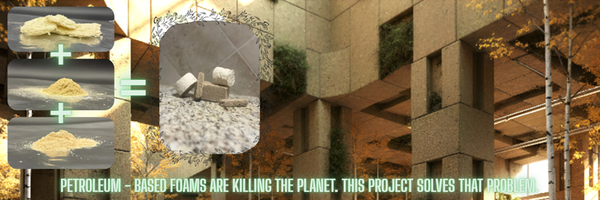
Sustainable Fire-retardant, Thermal Insulating Biomass-derived Foams for Green Buildings
ISEF · 2015
Application of Flame Retardant Treated Halloysite Nanotubes in Foam and Plastic Polymers
ISEF · 2020
Determining the Toxicological Effects of Polyurethane Foam and Complex Leachate on Artemia nauplii
ISEF · 2021
Scalable and Sustainable Synthesis of a Novel, Bio-Based Polyurethane Foam System Incorporating Industrial Byproducts and Waste
JSHS · 2022
Scalable and Sustainable Synthesis of a Novel, Bio-Based Polyurethane Foam System Incorporating Industrial Byproducts and Waste
Closest projects by meaning, across every fair and year in the corpus.
Browse more like this
Source: Regeneron International Science and Engineering Fair