Plant Sciences
Gibberellic acid is a growth hormone found naturally in plants. This experiment’s primary goal was to find the most effective gibberellin concentration to use on green beans to promote growt…
Plant Sciences
Gravitropism is a natural phenomenon occurring within plants that allows for the direction of roots and stems to be oriented to the strongest gravitational field for optimized growth and ger…
Plant Biology
Fourth Award
This experiment examined how varying Ibuprofen (IBU) concentrations affect the growth rate and germination success of Lactuca sativa (lettuce). It is hypothesized that Lactuca sativa. seeds…
Plant Biology
Third Award
The Artemis mission has sparked curiosity about a self-sustaining lunar colony. This experiment’s purpose was to emulate earth soil fertility in a lunar simulant using two essential nutrient…
Plant Biology
Second Award
Fertilizer accessibility is decreasing rapidly. Africa is already lacking 2 million metric tons of fertilizer. In India, 55 percent of the country’s soil is deficient in nitrogen. Though fer…
Plant Sciences
Show caves with artificial lighting can be colonized by algae that would not normally be native to the environment. Onondaga Cave algae has no exposure to natural light and minimal exposure…
Plant Sciences
Fourth Award
Currently available chemical insecticides are causing soil contamination. Exploring the potential of utilizing crop starches combined with capsaicinoids and glucosinolates extracted from Cap…
Plant Sciences
Crown gall causes great financial loss in plant nurseries, as up to 80% of plants have been lost. Crown gall is a disease that consists of tumor-like galls found in roots and trunks with a p…
Plant Sciences
Purpose: Over the last century, the global population has quadrupled. To combat future food demand, farmers worldwide will need to increase crop production, either by increasing the amount o…
Plant Sciences
Purpose: To optimize the effectiveness of fertilizers. Maximizing the productivity of the fertilizer leads to preventing overfertilization. Overfertilization negatively affects the environme…
Plant Biology
Honorable_mention Award
Global warming has been an issue on the rise for decades. Methane is a major gas contributing to global warming because it traps heat in the Earth’s atmosphere. Using recyclable materials as…
Plant Sciences
The purpose of this study was to test different hydrogels made by the researcher and compare how much moisture they held in soil. The researcher wanted to find an alternative to polyacrylate…
Plant Sciences
Cabbage is a vegetable commonly eaten by insects, but lettuce is not. The difference between these two vegetables is whether or not they contain latex. Figs, mulberries, and sun spurge—like…
Plant Sciences
Fourth Award
The Indian River Lagoon consumes forty-percent of Florida’s east coast, and is the most biodiverse estuary in North America. Recently the lagoon has gone through devastation, due to the abun…
Plant Sciences
Reducing apple tree crop load through thinning is a critical step in the cultivation of a healthy apple crop. Thinning ensures that an apple tree will bear fruit yearly, instead of in a cycl…
AJAS · 2022
Plant Science
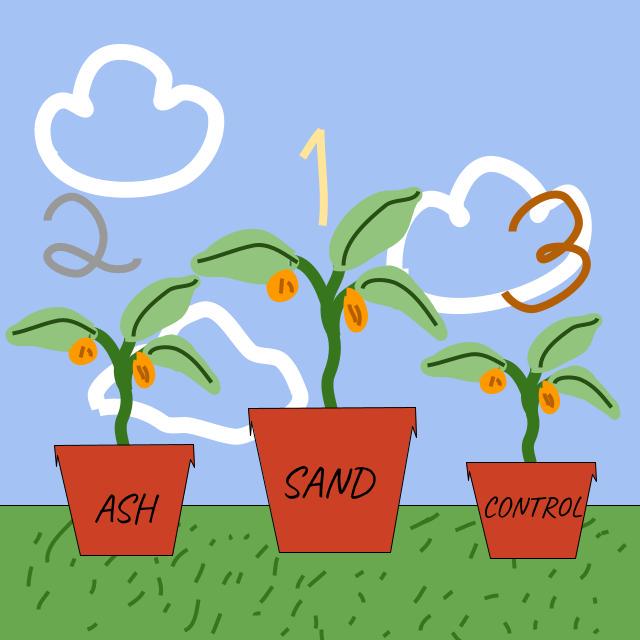
This study looked to determine if there was a significant difference between the masses of habaneros produced by plants that were grown in different types of soil so that the most productive…
Plant Sciences
Fourth Award
Distinct features of transcription factors play a primary role in plant growth and development. Understanding the root development of plants can further develop a more robust, improved versi…
Plant Sciences
Indoor farming is a growing sector. Yet, there remains no economically viable tool that can signal vegetation stress to growers before it becomes visible to the naked eye. If early warnings…
Plant Sciences
Minerals are a key source of nutrients for your bodily functions. Chelates are a new and upcoming concept of minerals in the health and medical field. Chelated minerals are minerals that hav…
Plant Sciences
Third Award
Under current global circumstances of climate change, developing heat-tolerant crops has become of critical importance. S. lycopersicum, the most commonly cultivated tomato variety, is a val…
Plant Sciences
This study was conducted to test the efficacy of indigenous technical knowledge (ITK) sourced in Maharashtra, India, when applied to the mid-Atlantic/north-eastern region(s)of the United Sta…
Plant Sciences
Fourth Award
Agricultural and horticultural crops evolve through competing against herbaceous plants, aka. weeds, with the help of herbicide. Finding an environment-friendly alternative has been a challe…
Plant Sciences
Diabetes is an epidemic in the United States. Mississippi is ranked third highest in diabetes. Bitter melon (Momordica charantia) is a popular plant used for treating diabetes- related condi…
Plant Sciences
Sulforaphane, a component of the cabbage family, fights inflammatory and infectious processes, shrinks the manifestation of lncRNAs in cancer cells and reduces their ability to form colonies…
Plant Sciences
The soil is the most important resource in agriculture. However, every day it is found in poor conditions, or even available. The population growth and change in consumption patterns force u…
Plant Sciences
Fourth Award
The Environmental Protection Agency reports nearly half a million contaminated sites throughout the U.S. Rhizoremediation is a promising solution to this global public health concern, as cur…
Plant Sciences
Second Award
Martian agriculture may be the most cost-effective means to develop a sustainable human life support system on Mars by employing in-situ resource utilization to convert atmospheric CO2 into…
Plant Sciences
First Award
Drought is the most serious threat to global food production and sufficiency. Late detection of drought stress in plants leads to irreversible crop damage and yield loss. The standard method…
Plant Sciences
A food desert is defined as an area where 30% of citizens live more than 1 mile from a grocery store. Factors like shipping cost, shipping time, and shelf life, cause store owners say import…
Plant Sciences
Chemical fertilizers, though productive in the short-run, rely heavily on nonrenewable resources that may deplete in the near future. Besides, oversupplied nutrients can harm nearby environm…